

Search Places to Stay & Save
Finding the best travel pillow means moving beyond airport duty-free beanbags that leave you with neck pain and regret. Long-haul flights have always demanded compromise between sleep and discomfort, but the gap between what’s sold at airport duty-free and what frequent travelers actually need has widened significantly. The beanbag-style neck pillows that dominated for decades weren’t designed for modern travel realities—tighter seat spacing, longer average flight times, and increasing awareness that poor sleep positioning creates problems that extend well beyond landing.
Recent developments in ergonomic design have changed what’s possible. Specialized brands like Trtl and BCozzy entered the market with structure-based solutions rather than simple cushioning. Memory foam density improved. Adjustability became standard rather than optional. The shift happened quietly, but travelers who compare current options to what was available even five years ago notice the difference immediately.
The challenge remains sorting genuine improvements from marketing iterations. This analysis examines twelve travel pillows across different design philosophies—memory foam wraps, body slings, structured neck supports, and compact flat designs—based on how they perform in actual long-haul conditions. The evaluation prioritizes sustained comfort over six-plus hour flights, compatibility with different seat types, and whether the portability trade-off justifies the cabin space they consume.
How Travel Pillow Design Changed
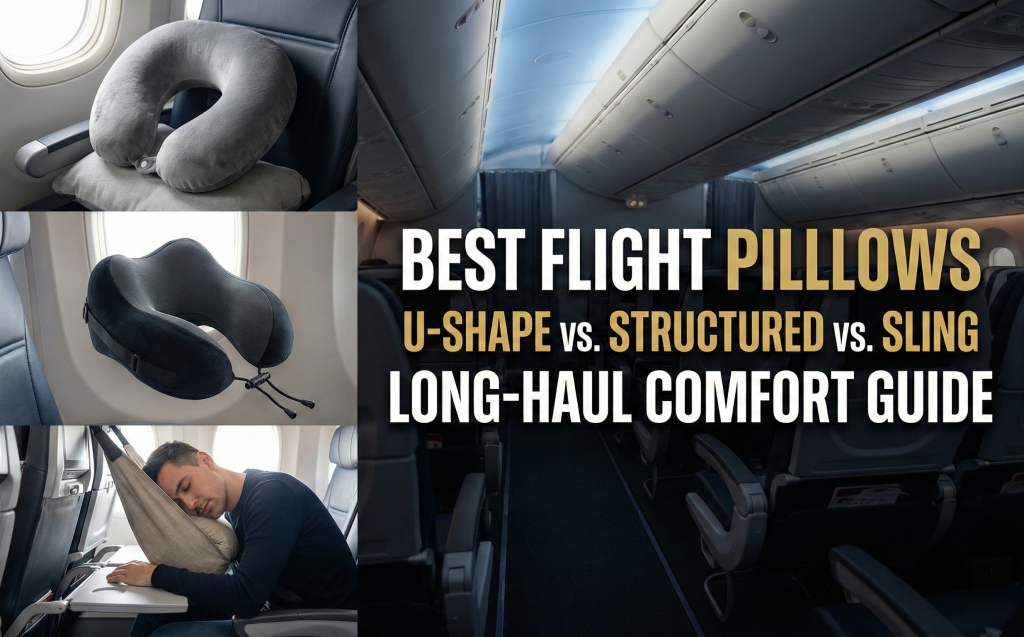
Traditional U-shaped travel pillows assumed a sleeping position that rarely occurs naturally. Most people don’t sleep with their head tilted straight back—they angle toward one side, lean forward slightly, or shift positions throughout a flight. The classic beanbag design supported one static position poorly rather than multiple positions adequately.
Posture specialists began pointing out a mechanical problem. When neck pillows push the head forward away from the seat back, cervical spine alignment worsens rather than improves. The “support” these pillows provided often created new discomfort rather than preventing it. Anouska Shenn, founder of corporate wellness agency The Office Yoga Company, notes that effective neck support requires complete wraparound structure with high enough sides to maintain alignment even during unconscious position shifts.
This observation drove design evolution in three directions. Structured support systems like Trtl’s internal framework maintain neck positioning without bulk. Wraparound designs with flat backs (BCozzy, Snugl) solve the forward-tilt problem while adding side support. Inflatable body slings (Travelrest) recognized that upper body position affects neck comfort as much as direct neck support does.
The materials improved simultaneously. High-density memory foam replaced loose filling. Adjustable closures addressed the one-size-fits-all limitation. Washable covers became standard after travelers pointed out that pillows used in confined spaces with recycled air need regular cleaning. Small changes compounded into substantial functional differences.
Memory Foam vs. Inflatable vs. Structured Support
Material choice determines not just comfort but also portability, durability, and whether the pillow maintains its support characteristics after repeated compression. Each category serves different priorities.
Memory foam pillows like Cabeau Evolution S3 and Kierain’s offering mold to individual neck contours and maintain that shape throughout a flight. The foam density matters more than most travelers realize—low-density foam compresses under sustained weight and stops providing support after two or three hours. High-density versions remain firm enough to prevent the gradual head-tilt that causes neck strain. The trade-off is bulk. Even when compressed, memory foam pillows occupy significant carry-on space.
Inflatable designs (Lifeventure, Travelrest) reduce to nearly nothing when deflated but introduce texture and temperature issues. Polyester against skin for six hours creates heat buildup. The inflation process requires finding a balance between firm support and over-inflation that feels rigid and uncomfortable. Travelers either accept these trade-offs for the space savings or find them deal-breaking.
Structured support systems take a different approach entirely. Trtl’s internal plastic rib cage maintains neck position without surrounding the entire neck circumference. The fleece wrap addresses temperature regulation while the framework prevents the head-bob that disrupts sleep. This works exceptionally well for forward sleepers but offers limited benefit to side-leaning sleepers. The design philosophy assumes one specific sleeping position rather than accommodating variation.
Understanding which category matches your actual sleeping behavior matters more than reviews or recommendations. Side sleepers gain nothing from structured forward-support designs. Travelers who shift positions frequently need wraparound flexibility rather than position-specific optimization. Those with limited carry-on space face a forced choice between portability and sustained comfort.
Quick Summary
- Memory foam provides consistent support but requires dedicated carry-on space
- Inflatable options compress to minimal size but introduce heat and texture concerns
- Structured supports optimize for one sleeping position rather than accommodating variation
- Material choice should match your actual sleeping patterns, not idealized preferences
Evaluating the Cabeau Evolution S3
The Cabeau Evolution S3 consistently appears in recommendations for travelers with existing neck or back sensitivity. The design includes several features that address specific mechanical problems rather than just adding cushioning.
The flat back matters more than it appears. By eliminating rear padding, the pillow allows the head to rest directly against the seat back without being pushed forward. This maintains natural cervical alignment instead of forcing a chin-down position. The memory foam density rates higher than budget alternatives, meaning it resists compression throughout long flights rather than flattening after the first few hours.
The adjustable toggle clasp solves a problem many travel pillows ignore—neck circumference varies significantly between individuals. A pillow that fits snugly on one person creates pressure points on another. The clasp allows real-time adjustment as swelling or position changes affect fit. The Velcro straps at the back connect to seat headrests, effectively transferring head weight to the seat structure rather than relying solely on neck muscles. This feature provides meaningful benefit only when seat headrests sit low enough to reach, which varies by aircraft and seat type.
The side pocket addition seems trivial but addresses a practical annoyance—loose items like earplugs and headphones have nowhere secure to go during flights. Having them attached to the pillow itself means one less thing to track or dig through bags to find.
The limitations center on bulk and compatibility. Even compressed in its cylindrical carry bag, the S3 occupies substantial space. Shorter travelers may find the headrest attachment straps don’t reach properly. The memory foam maintains its shape well, which means it doesn’t conform to extreme position variations—it supports one good position rather than adapting to multiple acceptable ones.
Trtl’s Structured Approach
Trtl challenged the assumption that travel pillows need to be pillows at all. Their original design wraps around the neck like a fleece scarf while hiding an internal support structure that holds the head upright without surrounding cushioning.
The system weighs 148 grams, roughly one-third the weight of memory foam alternatives. It folds completely flat, sliding into carry-on pockets that wouldn’t accommodate traditional pillows. The hypoallergenic fleece provides warmth that feels beneficial in over-air-conditioned cabins but can become excessive during boarding or in warmer aircraft.
The curved support structure sits under the jaw rather than around the neck, functioning more like a chin rest than traditional support. This prevents the forward head-bob that interrupts sleep but requires leaning into the rest rather than simply resting passively. Travelers report a brief adjustment period—the first 20-30 minutes feel unfamiliar, but once sleep begins, the position maintains naturally.
The Trtl Travel Pillow Plus addresses the main limitation of the original—fixed sizing that didn’t accommodate height variations. The adjustable version includes a variable chin rest that extends or retracts. The high-density foam upgrade improves support consistency, though at 225 grams it still weighs considerably less than U-shaped alternatives.
The design philosophy inherently favors forward sleepers. Those who naturally lean to one side or shift positions frequently find the structure restrictive rather than supportive. The Velcro fastening occasionally loosens during sleep, requiring retightening. The fleece, while soft, retains heat more than travelers expect, particularly on longer flights where cabin temperature fluctuates.
Options for Side Sleepers
Most travel pillows optimize for sleeping upright with the head tilted back or forward. Side sleeping—angling the head to rest against the window or toward the shoulder—requires different support characteristics that standard designs don’t provide.
BCozzy’s wraparound design addresses this specifically by allowing the pillow to fold asymmetrically. The microsuede covering and microfleece padding create a soft contact surface for the side of the head against the fabric. The flat back prevents forward posture displacement while the adjustable shape means travelers can bunch more support on one side rather than maintaining symmetry.
The patented three-position design (front support, side support, or both) gives actual flexibility rather than theoretical versatility. Travelers can test each configuration during the flight and settle on what works for their current seat and sleeping preference. The size variations—including options for children as young as 3—recognize that neck circumference differences affect fit as much as height does.
Travelrest’s inflatable body sling takes a different approach entirely. Rather than supporting just the neck, it creates a full upper-body rest surface that extends from shoulder to hip. The cross-body wear allows leaning weight into the pillow rather than supporting head weight through neck muscles alone. For middle seat passengers particularly, this creates a barrier between themselves and the adjacent traveler while providing something stable to lean against.
The inflatable nature introduces the usual trade-offs—polyester texture against skin, inflation time and effort, and the need to find optimal firmness through trial and error. The cord at the top loops over headrests to prevent sliding, though this requires headrests positioned appropriately. The design accommodates both sides of the body, which matters when window availability varies or when seat position changes between flight segments.
The side-sleeping category reveals a broader pattern in travel pillow design—products that accommodate variation in sleeping position generally serve more travelers than those optimized for single positions. The challenge is identifying whether a pillow’s “versatility” claims reflect genuine flexibility or just marketing language for a standard design.
In Short
- Standard travel pillows optimize for upright sleeping, often failing side-sleepers entirely
- BCozzy’s foldable design creates asymmetric support that matches lateral head positions
- Travelrest’s body sling approach supports upper body weight distribution, not just neck positioning
- Side-sleeping compatibility requires testing actual fold configurations, not just reading feature lists
Budget Considerations and Value Trade-offs
Price ranges for travel pillows span from under $10 to over $100, which raises questions about whether premium options deliver proportional comfort improvements or whether budget alternatives provide adequate function.
Kierain’s memory foam option at approximately $10 represents the budget category. The 100% memory foam construction and velour cover match materials found in products costing five times more. The snap fastening provides secure closure. The compressed size fits into small wash-bag-sized pouches. The foam density sits lower than premium alternatives, meaning it compresses more noticeably after three to four hours of use, but it doesn’t collapse entirely.
For occasional travelers or those taking shorter flights (under five hours), the performance difference between budget and premium memory foam pillows often doesn’t justify the cost gap. The support degrades faster with repeated use, but “faster” means months rather than weeks for typical vacation travel frequency. The cost-effectiveness calculation shifts for frequent travelers—ten long-haul flights annually makes premium durability more economically rational.
At the opposite end, Slip’s silk travel pillow at $120 prioritizes hair and skin benefits alongside neck support. The 22-momme mulberry silk reduces friction that creates hair tangling and face creasing. For travelers concerned with maintaining appearance after long flights, particularly those traveling for business or special events, this addresses a genuine problem. For others, it’s an expensive solution to a problem they don’t have.
The mid-range category ($40-70) includes most structured and specialized designs like Trtl, BCozzy, and Cabeau models. These typically justify their pricing through design features that solve specific mechanical problems—flat backs, adjustable positioning, or materials that maintain support characteristics longer. The value proposition depends entirely on whether the specific problem each solves matches the issues you actually experience during flights.
Ostrichpillow Go at $69 sits in this category with ergonomic design and removable washable covers. The memory foam quality rates high, and the pillow compresses into a compact drawstring bag despite appearing bulky when deployed. Posture specialists recommend this model specifically, which suggests the premium pricing reflects functional benefits rather than just brand positioning.
The pricing pattern reveals that material costs matter less than design refinement. The engineering required to create a flat-back profile or an adjustable chin rest drives costs more than foam quality alone. Travelers should identify which specific design features address their actual discomfort patterns rather than selecting based solely on price tier or brand recognition.
Specialized Design Categories
Beyond the main categories of memory foam wraps and structured supports, several niche designs address specific use cases that standard options serve poorly.
Mini classic pillows like the Snoooze travel pillow target business and first-class passengers with lie-flat seats. These aren’t neck supports—they’re actual pillows designed to be portable rather than cabin-friendly. The 100% cotton case and machine-washable construction address hotel pillow inconsistency rather than upright sleep challenges. The full-size version serves as a regular pillow; the mini at 30cm by 11cm when rolled provides enough support for side-lying or back-sleeping without occupying excessive luggage space.
The use case extends beyond the flight itself. Travelers who encounter unsatisfactory hotel pillows across multiple destinations benefit from carrying a known-comfortable option. The cost-benefit analysis depends on travel frequency, accommodation standards, and personal sensitivity to pillow characteristics.
Huzi’s infinity pillow represents another specialized approach—prioritizing warmth and softness over rigid support. The breathable bamboo construction wrapped in a continuous loop design functions more like a sleeping bag for the neck than a structural support system. This serves travelers who sleep cold or who prioritize cozy comfort over postural optimization. The scrunching capability allows bunching material where needed, creating customized thickness distribution.
The limitation is obvious—travelers seeking firm neck support or dealing with existing pain don’t benefit from soft, flexible designs. The target user values warmth and comfort over mechanical positioning. The bamboo material breathes better than synthetic alternatives, addressing some of the heat-retention issues that inflatable and memory foam pillows create.
Dot&Dot’s twist travel pillow introduces flexibility as its primary feature. The memory foam can be shaped into different configurations—neck wrap, side support, lower back cushion, or window buffer. The versatility assumes travelers shift positions frequently or use the pillow for multiple purposes beyond neck support.
For restless sleepers or those who use flights for activities beyond sleeping (reading, watching content, eating), having one portable cushioning option that serves multiple functions reduces the gear they need to carry. For travelers who sleep in one position consistently, the flexibility adds no value and introduces potential shape instability.
Portability and Compression Reality
Cabin space constraints have intensified as airlines reduced carry-on allowances and personal item dimensions. The relationship between a travel pillow’s compressed size and its deployed effectiveness creates a trade-off that manufacturers navigate differently.
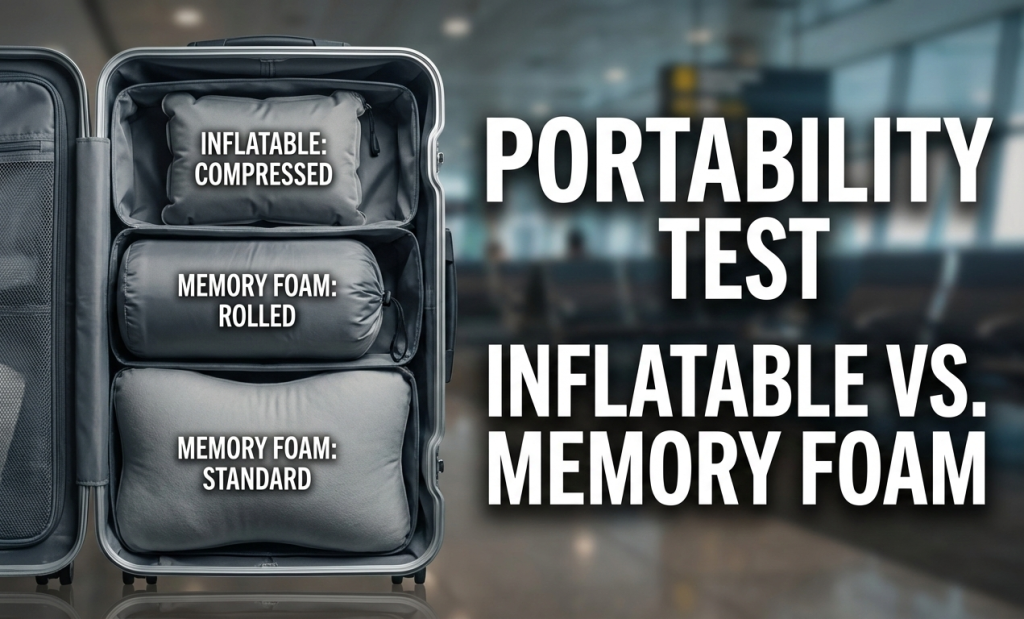
Inflatable designs solve portability definitively. Lifeventure’s pillow at 54 grams folds smaller than most purses and inflates in under two minutes. The polyester material packs into a minimal travel bag. For backpackers or travelers with extremely limited carry-on space, the portability advantage overwhelms other considerations. The comfort limitations are real—firm polyester doesn’t replicate soft fabric against skin, and temperature regulation suffers—but the space savings create options for travelers who couldn’t otherwise carry any pillow at all.
Memory foam compression varies significantly by model. Cabeau’s cylindrical case contains a compressed pillow efficiently but still occupies space roughly equivalent to a water bottle. Kierain’s model squashes into a smaller bag but rebounds slowly, needing time to fully expand after compression. The compressed size matters less than how quickly the pillow returns to functional shape—some memory foams need 15-20 minutes to fully expand, which matters when flights board quickly or when overhead bin access becomes limited.
Structured designs like Trtl fold completely flat, sliding into laptop sleeves or the thin pockets designed for magazines and documents. This placement flexibility means they don’t compete for main compartment space with clothing or electronics. The included clip allows external attachment to backpack straps, removing them from carry-on space calculations entirely. This approach works specifically because the structure doesn’t depend on thickness—the support mechanism is architectural rather than cushioning-based.
The portability calculation requires honest assessment of your actual carry-on situation. Travelers with large checked bags and minimal carry-on items can prioritize comfort over compression. Those traveling carry-on only or with specific size restrictions face genuine constraints that might make an inflatable design rational despite comfort compromises. International travelers switching between airlines with different allowances need pillows that compress significantly or that they’re willing to check.
Key Takeaways
- Inflatable designs compress to minimal size but sacrifice comfort and temperature regulation
- Memory foam compression varies by density; rebound time affects immediate usability
- Structured designs achieve portability through thin profiles rather than compression
- Honest carry-on assessment should precede pillow selection, not follow it
Hygiene and Maintenance Patterns
Travel pillows contact skin, hair, and aircraft surfaces throughout flights, yet many travelers don’t consider cleaning requirements until odors or visible dirt become obvious. The maintenance burden varies significantly by design and material.
Removable washable covers (Cabeau, Ostrichpillow, Snugl) allow regular cleaning without affecting the core pillow structure. Cotton covers survive frequent washing better than synthetic blends. Velour and microsuede develop wear patterns faster, particularly where the fabric folds or compresses repeatedly. Travelers should verify whether replacement covers are available separately—some brands sell them, others don’t, which affects the pillow’s useful life span.
Non-removable designs (Trtl’s original fleece wrap, Huzi’s bamboo loop) require surface cleaning or full washing. Fleece retains moisture and dries slowly, meaning travelers can’t clean it mid-trip and expect it to be usable for the return flight. Bamboo’s natural antimicrobial properties provide some advantage, but “antimicrobial” doesn’t mean “self-cleaning”—it just means bacteria accumulate slower than on synthetic materials.
Memory foam cores generally can’t be washed directly. Spot cleaning handles small stains, but the foam absorbs moisture that doesn’t dry easily. Compressed packing while damp creates mildew risk. This limitation means the cover’s washability becomes critical—if the cover can’t be removed and cleaned regularly, the pillow accumulates oils, skin cells, and environmental grime that can’t be effectively addressed.
Inflatable pillows clean easily but degrade faster. The valve mechanisms accumulate debris. The plastic coating cracks with repeated inflation and deflation. The expected lifespan sits considerably shorter than foam alternatives—typically one to two years of regular use versus three to five years for quality memory foam designs.
Storage between trips matters as much as cleaning. Compressed storage accelerates material degradation. Memory foam should recover to full shape between uses. Inflatable pillows stored inflated maintain valve integrity longer. These considerations affect long-term value beyond initial purchase price.
Adjustment Mechanisms and Fit Customization
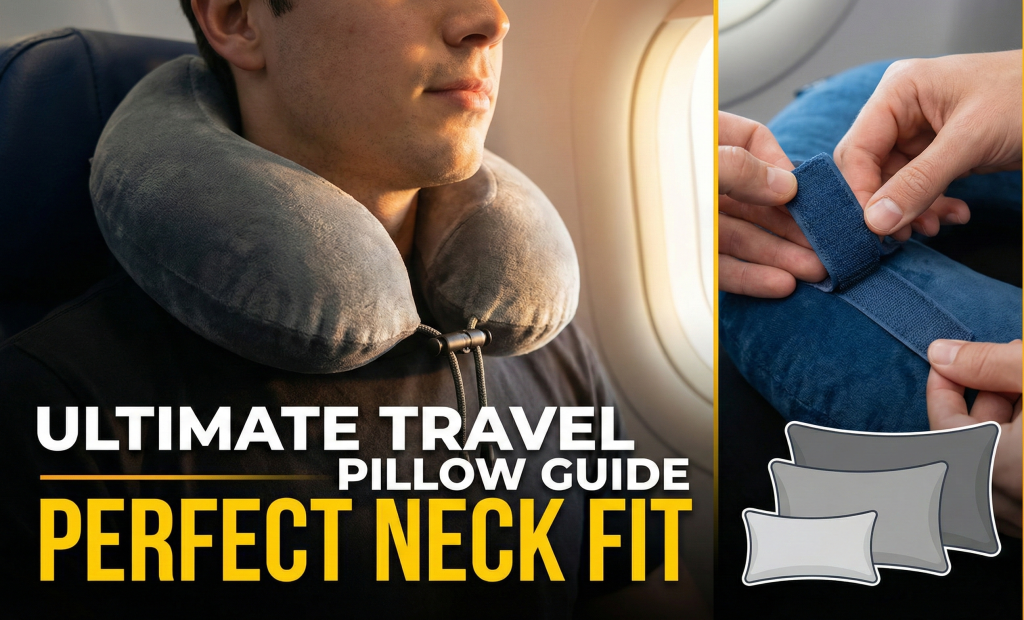
Neck circumference varies enough between individuals that one-size-fits-all designs create problems—either they fit too loosely and provide inadequate support, or too tightly and create pressure points that become uncomfortable within an hour.
Adjustable closures fall into several categories with different functional characteristics. Toggle clasps (Cabeau S3) allow infinite adjustment within their range and stay put once set. Velcro strips (Trtl, Bcozzy) adjust easily but can loosen gradually during sleep, requiring periodic retightening. Snap closures provide fixed adjustment points that work well for some users and poorly for others depending on where their size falls relative to the snap placement.
Multiple size options (BCozzy’s adult, youth, and child sizes) address the problem through manufacturing variation rather than user adjustment. This works well when travelers can try sizes before purchasing but creates return complications for online orders. Travelers near size boundaries often discover they fall between the available options rather than clearly within one.
Trtl’s adjustable chin rest on the Plus model represents a different approach—rather than adjusting neck circumference, it varies the height at which support is provided. This accommodates torso length differences more than neck size variation. Taller travelers benefit significantly; shorter travelers find the adjustment range doesn’t extend far enough downward.
The adjustment mechanism’s durability matters for frequent travelers. Velcro loses grip strength after repeated use. Toggle cords fray. Snap buttons pull through fabric under stress. The initial adjustment capability means little if the mechanism degrades after ten or fifteen flights. Reviews and testing should evaluate long-term adjustment reliability, not just initial function.
Some designs avoid adjustment by building in flexibility—wraparound styles like Dot&Dot’s twist pillow conform through material properties rather than mechanical adjustment. The memory foam bends and holds whatever shape the traveler creates. This eliminates failure points but introduces shape stability questions—some travelers find the pillow gradually losing the configuration they set as it responds to weight and movement.
Sleeping Position Compatibility Reality
Travel pillow marketing often claims universal suitability when actual compatibility depends heavily on natural sleeping position. Mismatches between pillow design and sleeping preference create discomfort that no amount of adjustment fixes.
Forward sleepers—those who tilt the head down toward the chest—benefit most from structured chin supports (Trtl) or high-back memory foam designs (Ecosafeter). These prevent the head from dropping forward excessively while still allowing the natural forward tilt. U-shaped pillows that support the sides and back of the neck without forward support don’t help this sleeping position at all.
Backward leaners need support primarily at the back of the neck with minimal forward padding. Flat-back designs (Cabeau, BCozzy) serve this position well. Traditional U-shaped pillows with equal padding all around push the head forward away from the seat back, worsening comfort rather than improving it.
Side sleepers require asymmetric support—more padding on one side than the other. Adjustable pillows (BCozzy, Snugl) or flexible designs (Dot&Dot twist) allow this configuration. Structured supports optimized for forward sleeping (Trtl) provide little benefit. Body slings (Travelrest) that support the entire upper body often work better than neck-only solutions because they address the shoulder and upper back positioning that affects side-sleeping comfort as much as neck angle does.
Combination sleepers who shift positions throughout the flight face the hardest matching problem. Pillows optimized for one position often impede others. Wraparound designs with multiple configuration options theoretically serve this need, but travelers report that reconfiguring a pillow mid-flight while half-asleep rarely happens—they tend to settle on one configuration and keep it rather than adjusting as their position changes.
The sleeping position assessment should happen before considering specific pillow features. Travelers who don’t know their natural sleeping position can determine it by noticing how they wake up during non-flight sleep—pillow position and body angle when waking indicate natural preferences more accurately than how they consciously try to sleep.
Bottom Line
- Pillow compatibility depends on natural sleeping position, not adjustability claims
- Forward sleepers need chin support; backward leaners need flat-back designs
- Side sleepers benefit from asymmetric padding or full upper-body support systems
- Combination sleepers should prioritize flexibility over position-specific optimization
Material Sensitivities and Temperature Regulation
Prolonged skin contact with travel pillow materials creates comfort issues that don’t emerge in short-term testing. Material choice affects both sensory comfort and thermal regulation throughout multi-hour flights.
Synthetic polyester (most inflatable options, some memory foam covers) generates heat accumulation and moisture retention. The non-breathable surface traps warmth, creating sweating where the pillow contacts skin. In already warm cabins or during boarding delays, this becomes significantly uncomfortable. The smooth texture feels pleasant initially but sticky after an hour as natural skin oils combine with minimal perspiration.
Natural materials—cotton, bamboo, silk—breathe better and wick moisture more effectively. Cotton covers (Snoooze) absorb moisture without feeling damp. Bamboo (Huzi) provides natural temperature regulation, feeling cool initially and warming gradually without overheating. Silk (Slip) creates minimal friction while conducting heat away from contact points. These materials generally cost more and require more careful maintenance than synthetics.
Memory foam itself doesn’t breathe—it’s dense by design, which prevents air circulation. The comfort depends entirely on the cover material since that’s what contacts skin directly. High-quality memory foam pillows pair dense foam with breathable natural fiber covers to address this. Budget versions often use synthetic covers that negate any comfort advantage the foam provides.
Fleece (Trtl) creates warmth that serves some travelers and overwhelms others. In cold aircraft, fleece prevents the chill that interrupts sleep. In warm conditions or on travelers who naturally run hot, fleece creates overheating problems. The material choice assumes consistent cabin temperature, which doesn’t reflect reality—temperatures vary by aircraft, season, time of day, and specific seat location relative to vents.
Travelers with material sensitivities or specific temperature regulation needs should prioritize material composition over design features. A perfectly designed pillow made from a material that irritates your skin or traps heat provides no value regardless of its structural benefits.
When Travel Pillows Don’t Solve the Problem
Travel pillows address positioning and cushioning, but several common flight discomfort sources fall outside their scope. Understanding these limitations prevents investing in solutions that won’t help.
Seat width and recline restrictions limit what any pillow can accomplish. When seats lack sufficient recline or when the passenger behind prevents reclining, no neck pillow compensates for spine angle problems created by forced upright posture. Pillows that assume even minimal recline availability (most designs) don’t function properly in these situations.
Extended flight duration beyond eight or nine hours creates cumulative discomfort that positioning alone doesn’t resolve. Blood circulation issues, muscle stiffness, and general fatigue compound regardless of neck support quality. The pillow might prevent neck pain specifically, but it doesn’t address broader physical stress from prolonged immobility.
Pre-existing neck or spinal conditions may require medical-grade solutions that travel pillows don’t provide. Travelers with diagnosed issues (herniated discs, chronic pain conditions, recent injuries) should consult with medical professionals about travel accommodation needs rather than relying on consumer products designed for general discomfort prevention.
Cabin environment factors—noise, light, temperature fluctuations, pressure changes—affect sleep quality independent of physical positioning. The most comfortable pillow in the world doesn’t create restful sleep in a brightly lit cabin with ambient noise and frequent interruptions. Effective flight sleep typically requires combining a pillow with eye masks, earplugs or noise-canceling headphones, and strategic seat selection.
The improvement travel pillows provide should be understood as incremental rather than transformative. They prevent specific types of neck pain and improve positioning comfort. They don’t enable deep, restorative sleep in economy seats during daytime flights. Setting appropriate expectations prevents disappointment and helps travelers make rational cost-benefit evaluations.
Selection Framework
Choosing a travel pillow requires matching specific design characteristics to your actual needs rather than selecting based on reviews, popularity, or price tier alone.
Start with sleeping position identification. Determine whether you naturally lean forward, backward, or to the side. Test this by noticing your position when waking from sleep in other settings—cars, trains, or at home. This single factor eliminates roughly half of available options immediately.
Evaluate your carry-on space situation honestly. If you travel with minimal luggage or face strict size restrictions, portability becomes a primary constraint that overrides comfort optimization. If space isn’t limited, compressed size matters less than deployed effectiveness.
Assess trip frequency and flight duration patterns. Occasional travelers on shorter flights (under five hours) can accept compromises that frequent travelers on long-haul routes cannot. The durability and maintenance burden that seem manageable for two or three trips annually become problematic at ten or fifteen trips.
Consider existing pain patterns or sensitivities. Travelers with known neck issues need specific support characteristics that healthy travelers don’t require. Material sensitivities or temperature regulation needs eliminate certain options regardless of their other qualities.
Test adjustability in the actual purchase environment when possible. Features that seem functional in testing sometimes fail in real use—Velcro that won’t stay secured, toggles that slip, or shapes that don’t hold configuration. Physical testing reveals these issues better than product descriptions or photos.
The final selection should represent a deliberate match between pillow characteristics and your specific situation rather than a general “best option” approach. The best travel pillow for one traveler often proves mediocre for another with different needs, constraints, or preferences.
Quick Summary
- Selection should start with sleeping position identification, not product reviews
- Carry-on constraints create real trade-offs between portability and comfort
- Trip frequency affects whether durability and maintenance burden matter
- Testing adjustability in person reveals function issues that specs don’t show
Conclusion
The transformation in travel pillow design over the past five years reflects better understanding of actual flight sleep mechanics rather than just comfort preferences. Flat-back profiles, adjustable positioning, structured support systems, and material innovations each address specific mechanical problems that traditional designs ignored.
The gap between what works and what gets marketed hasn’t closed entirely—products still overpromise universal suitability when compatibility depends heavily on individual factors. The selection process requires filtering options through your specific sleeping position, carry-on constraints, and sensitivity to material or temperature factors. No single pillow serves all use cases well, which means optimal choices vary by traveler rather than ranking consistently across all situations.
For travelers who’ve been using whatever they grabbed at duty-free or who’ve avoided pillows entirely due to bulk concerns, testing a well-matched option from current designs typically reveals immediate improvement. The investment makes sense not because premium products eliminate flight discomfort entirely, but because they reduce specific, predictable pain points that compound over long flights. The goal isn’t perfect comfort—that’s unrealistic in economy seating—but rather preventing the neck strain, headaches, and stiffness that make the hours after landing noticeably worse than necessary.
Deliberate selection based on actual sleep patterns and honest needs assessment leads to better outcomes than defaulting to highest-rated or most popular options. The best travel pillow is the one that matches your specific situation, not the one that worked best for the most people.