

Search Places to Stay & Save
For years, the conventional advice was simple: book on Tuesday, get the best deal. Airlines would drop prices early in the week, competitors would match by Tuesday afternoon, and savvy travelers would swoop in. That system, however, no longer exists. Airlines now adjust prices constantly—sometimes multiple times per day—based on demand, competitor fares, and booking algorithms. The result is that “best day” advice has become more myth than method. What travelers actually need is a framework for when to book flights cheapest based on route type, advance notice, and flight day selection rather than calendar superstition.
Multiple studies have tried to pin down the optimal booking window, and while their findings vary, they reveal a clearer pattern than the outdated Tuesday rule. The real cost factors are timing relative to departure, destination type, and which day you actually fly. Understanding these variables allows travelers to make defensible booking decisions without chasing phantom Tuesday deals that disappeared a decade ago.
Does Booking Day Still Matter?
Research on booking days produces conflicting conclusions. A 2025 Expedia study found Sunday bookings saved an average of 6% on domestic flights compared to Fridays—about $18 on a $300 ticket. International bookings showed greater variance, with potential savings reaching 17%. Meanwhile, a 2024 Upgraded Points analysis pointed to Monday or Tuesday as optimal, with Friday and Saturday being the most expensive. Google’s research suggested Tuesday through Thursday bookings offered slight advantages.
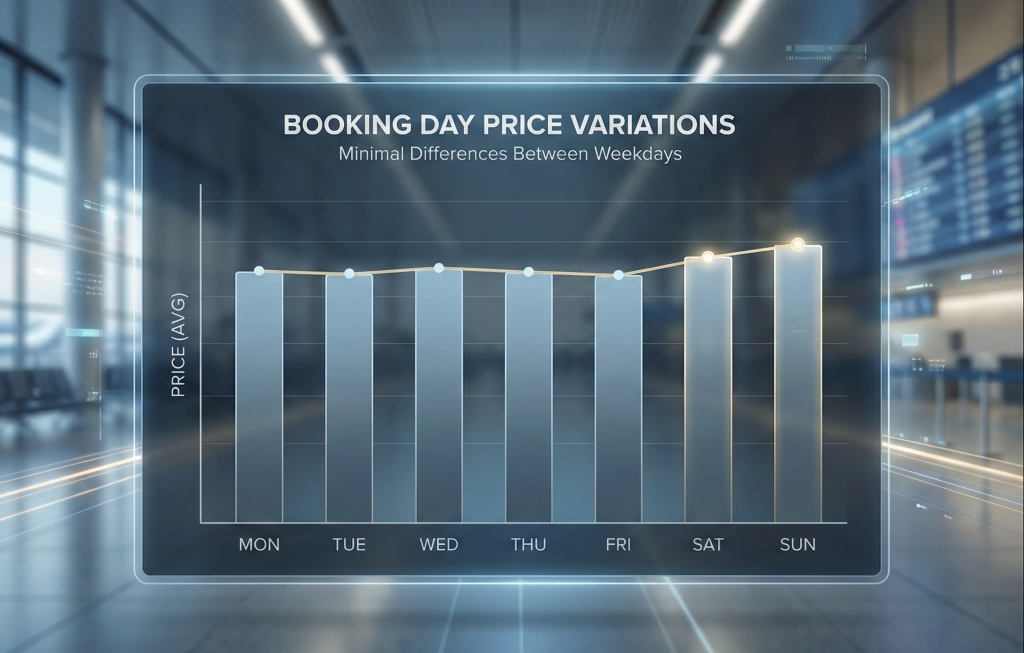
The common thread across these studies is modest savings—usually under 10% for domestic routes. What travelers see depends on route competition, seasonal demand, and airline pricing strategies that vary by carrier. No single weekday guarantees the best price because dynamic pricing adjusts faster than weekly patterns can predict.
Fridays consistently appear as poor booking days across multiple data sets, likely because travelers booking last-minute weekend trips drive up prices. Beyond that, booking patterns show more value in advance timing than in selecting a specific weekday.
Quick Summary
- Sunday may offer slight savings over Friday bookings, but differences are typically minimal
- Dynamic pricing has largely eliminated the Tuesday booking advantage
- Fridays consistently rank among the most expensive booking days
- Advance booking timing matters more than day-of-week selection
How Far in Advance Should You Book?
Airlines open booking windows up to 11 months out, but purchasing on maximum advance notice rarely produces the best price. The optimal window depends on whether you’re booking domestic or international routes and varies significantly by destination region.
Domestic Flight Booking Windows
For flights within the U.S., booking patterns show the strongest pricing between 34 and 86 days before departure—roughly one to three months of advance notice. Travelers booking within this window save an average of 25% compared to last-minute purchases. Google’s analysis found similar results, with prices reaching their lowest point around 44 days out and remaining favorable from 21 to 60 days in advance.
This window exists because airlines balance empty seat risk against revenue optimization. Too far out, they’re reluctant to discount. Too close to departure, they assume travelers have limited options and will pay premium prices. The 30-60 day range represents where these factors intersect for most domestic routes.
International Booking Patterns
International timing varies more by region. For Mexico and Caribbean destinations, Expedia found that booking 18 to 29 days in advance can save 17% compared to three-month advance bookings. These shorter booking windows work because route competition is high and airline algorithms recognize last-minute demand is price-sensitive.
European routes follow different patterns. Google’s data identified 129 days as the sweet spot, with favorable pricing available from 50 to 179 days out. This longer window reflects higher ticket costs, more complex routing, and seasonal demand variations that require earlier planning.

In Short
- Domestic U.S. flights: book 34-86 days ahead for best pricing
- Mexico/Caribbean: 18-29 days advance notice often yields savings
- European routes: 50-179 days out, with optimal pricing around 129 days
- Booking a year ahead rarely produces the lowest fares
Best Days to Fly (Not Book)
The day you actually travel affects prices more than when to book flights cheapest. Expedia’s analysis shows Saturday departures produce the lowest domestic fares, while Thursdays work best for international routes. Hopper’s research confirms that Tuesday through Thursday departures generally cost less, particularly for U.S. domestic travel. This strategy can reduce ticket costs by approximately 15%.
Sunday departures consistently rank as most expensive for both domestic and international travel. This pricing reflects business travel patterns, where companies book Monday morning meetings requiring Sunday evening arrivals, and leisure travelers returning home before Monday work schedules.
Midweek flights offer another advantage beyond price: airports and planes are less crowded. Travelers flying Tuesday or Wednesday face shorter security lines, fewer gate changes, and lower chances of delays caused by connecting passenger volume.
Key Takeaways
- Saturday domestic departures and Thursday international flights typically cost less
- Tuesday-Thursday departures average 15% savings over weekend travel
- Sunday is consistently the most expensive day to fly
- Off-peak travel days also mean less crowded airports and fewer delays
Practical Strategies Beyond Timing
Booking windows matter, but several tactical approaches can strengthen cost control regardless of when to book flights cheapest according to calendar patterns.
Travel During Shoulder Seasons
Peak demand drives premium pricing. Spring break Florida trips, Thanksgiving family visits, and European summer vacations all carry elevated fares because demand concentrates in narrow windows. Beach destinations cost less in January than March despite comparable weather. European flights drop significantly in September and October compared to June through August.
Shifting travel by even a few days around major holidays can expose meaningful price differences. A Tuesday departure before Thanksgiving rather than Wednesday saves money while avoiding airport congestion. This flexibility works because airline pricing algorithms recognize demand curves that spike on specific dates.
Monitor Price Fluctuations
Price tracking tools eliminate manual fare checking. Google Flights, Kayak, and Skyscanner use historical data to project whether current prices are high or low relative to typical patterns. These platforms send email alerts when fares change, allowing travelers to act on drops without constant monitoring.
Most tools allow filtering by airline, departure time, and nonstop vs. connection preferences. This specificity helps travelers balance price optimization with schedule requirements.
Rebook When Prices Drop
Major U.S. airlines have eliminated change fees on standard economy tickets, creating an opportunity to capture price decreases after initial booking. The strategy is straightforward: book an acceptable fare immediately, continue monitoring prices, and rebook if costs drop.
This approach requires understanding several constraints. Basic economy fares remain non-changeable, so ticket flexibility requires purchasing standard economy or higher fare classes. Savings come as airline vouchers rather than credit card refunds, and these vouchers typically expire within one year of issue. There’s no guarantee prices will decrease, so travelers should assume their initial purchase represents final cost while remaining open to potential savings.
Making Booking Decisions Without Perfect Data
Research provides directional guidance rather than absolute rules. Booking 30-60 days ahead for domestic travel and 50-130 days for international routes positions travelers well, but specific routes vary. Friday bookings tend to cost more. Sunday flights carry premium pricing.
The absence of a single “best” answer reflects how airline pricing actually works: thousands of factors adjust continuously based on competitive pressure, seasonal patterns, and demand forecasting. Travelers who understand these mechanisms can make informed decisions without waiting for perfect timing that doesn’t exist.
What matters more than pinpointing exact booking days is avoiding clearly poor timing—last-minute panic bookings, peak travel days, maximum advance purchases—and using the booking windows that consistently show favorable pricing. This approach won’t guarantee the absolute lowest fare, but it significantly reduces the likelihood of overpaying due to avoidable timing mistakes.