
Search Places to Stay & Save
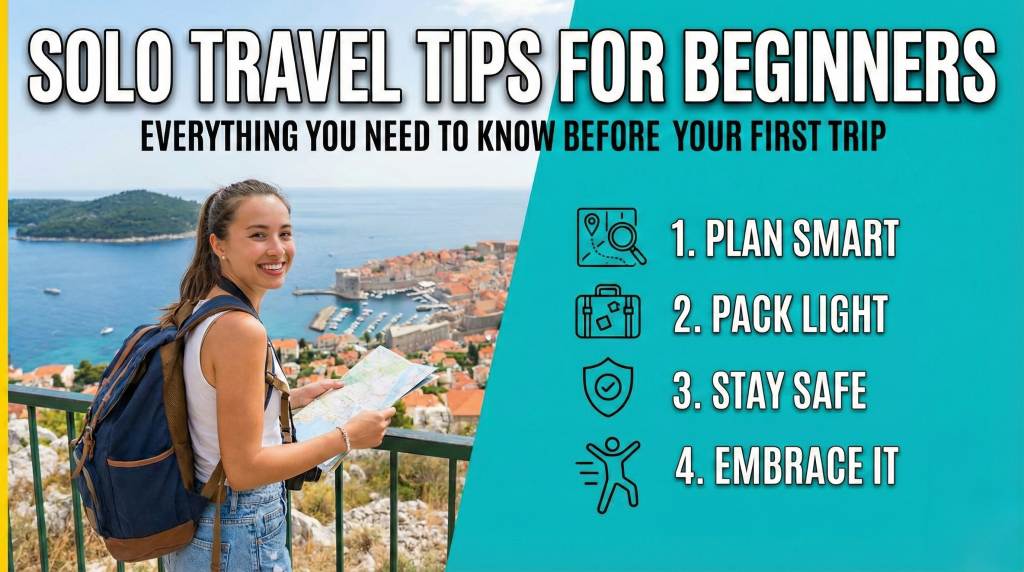
Most solo travel tips beginners receive focus on building courage, but that’s backward. Confidence develops after you understand the mechanics, not before. The real question isn’t whether you’re brave enough—it’s whether you understand what solo travel actually involves versus what you’ve imagined. First-time solo travelers often overestimate social challenges and underestimate logistical ones. Booking patterns show that travelers who prepare for practical details (accommodation timing, currency mechanics, connectivity plans) report significantly lower first-day anxiety than those who focus primarily on “building courage.” These solo travel tips beginners actually need address the decision points and preparation steps that make solo travel feel manageable rather than overwhelming, regardless of personality type. This guide maps everything from destination selection to safety protocols to meeting people on the road.
Understanding Solo Travel Readiness
Solo travel doesn’t require a particular personality type. Introverts and extroverts both travel alone successfully, but for different reasons and with different approaches. The critical factor is understanding what you actually need from the experience.
Many travelers assume they need to enjoy solitude to travel alone. Data from travel forums suggests otherwise. Some solo travelers actively seek social interaction and use solo travel as a way to meet more people than they would in group travel. Others specifically want extended alone time away from social obligations. Both approaches work. The mistake is assuming there’s one “correct” solo travel personality.
Quick Summary:
- Solo travel suits different personality types with different goals
- Social vs. solitary preferences both work—clarity on your needs matters more than personality type
- First-trip anxiety typically stems from logistical uncertainty, not personality mismatch
Decision Framework: Are You Ready?
The readiness question isn’t about confidence. It’s about three specific capabilities:
Comfort with independent decision-making. Solo travel requires making dozens of micro-decisions daily without consultation. Where to eat. Which bus to take. Whether to extend or cut short a day’s plans. Travelers who struggle with decision fatigue in daily life often find solo travel more draining than those who are comfortable making quick judgment calls and accepting imperfect outcomes.
Tolerance for discomfort. Not danger—discomfort. Getting briefly lost. Arriving at accommodation that doesn’t match photos. Spending an evening alone when you hoped to meet people. These situations aren’t failures. They’re normal travel mechanics. The question is whether you can sit with mild discomfort without spiraling into regret.
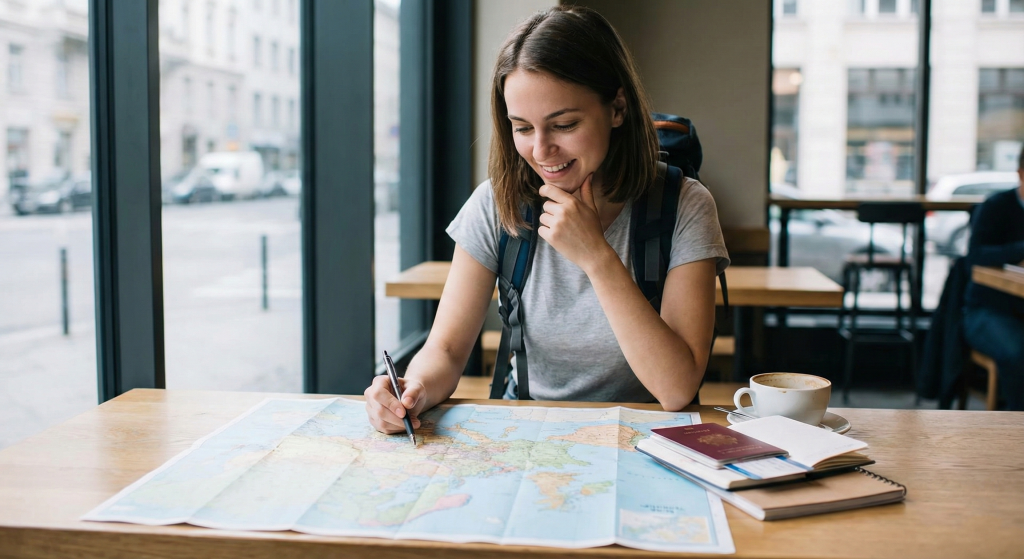
Baseline practical competence. Can you read a map? Navigate public transit in your home city? Book accommodation online? Manage a budget? These skills directly transfer. Solo travel doesn’t require expert travel skills—it requires the same competence you’d use planning a weekend trip in your own country.
Common Preparation Mistakes
First-time solo travelers often over-prepare emotionally and under-prepare logistically. They spend weeks building courage but arrive without understanding basic currency exchange or how to get from the airport to their hotel.
The reverse approach works better. Detailed logistical preparation naturally builds confidence because you understand the mechanics. Knowing exactly how airport transit works, having accommodation pre-booked, and understanding local payment norms removes the primary sources of first-day overwhelm.
Another pattern: travelers choose destinations based on bucket-list appeal rather than first-trip suitability. A destination can be objectively interesting and simultaneously a poor choice for a first solo trip. Language barriers, complex transportation systems, and cultural norms around solo diners all affect first-trip experience more than they affect experienced solo travelers.
Destination Selection Framework
Destination choice for a first solo trip requires different evaluation criteria than for experienced travelers. The goal isn’t to pick the “safest” destination—it’s to pick one where you can focus on learning solo travel mechanics rather than fighting the destination itself.
Language Consideration
English-speaking destinations significantly reduce cognitive load for English-speaking travelers. This isn’t about safety. It’s about processing bandwidth. When you’re managing solo travel logistics for the first time—navigation, money, accommodation problems—doing it in your native language means one less variable draining mental energy.
Canada, the United States, the United Kingdom, Ireland, Australia, and New Zealand work well for this reason. You’re still traveling—different cities, landscapes, cultural variations—but you can read signs, ask for help, and handle problems without translation apps.
Some travelers resist this approach because it feels insufficiently adventurous. But adventure comes from solo travel dynamics, not from language barriers. Meeting strangers, navigating alone, making all decisions independently—these experiences are present regardless of language environment.
In Short:
- First solo trips in English-speaking destinations let you focus on solo travel mechanics rather than language management
- Adventure comes from traveling alone, not from communication difficulty
- Language-matched destinations still provide genuine travel experience with different cities and cultures
Practical Infrastructure Assessment
Transportation clarity matters more for first trips than for experienced solo travelers. Cities with straightforward public transit systems (clear maps, English signage, contactless payment) reduce the learning curve. Complex systems aren’t impossible, but they add another learning layer when you’re already managing solo travel basics.
Walkability plays a similar role. Destinations where major points of interest cluster within walking distance let you explore without immediately mastering bus or metro systems. You can expand your radius gradually as confidence builds.
Accommodation density affects backup options. If your booked accommodation disappoints, can you easily find alternatives nearby? Cities with concentrated hotel/hostel districts provide more flexibility than those where accommodation is scattered.
Social Infrastructure for Solo Travelers
Some destinations have developed infrastructure specifically helpful for solo travelers. Free walking tours exist in most major cities and provide natural opportunities to meet other travelers while learning the city. These tours typically run on tips, making them budget-friendly.
Hostel culture varies significantly by destination. European hostels generally have strong social infrastructure (common areas, organized events, communal kitchens designed for interaction). Asian hostels vary more widely. North American hostels often lean more toward basic accommodation than social hubs.
Meetup groups and travel communities operate in many cities, but density and accessibility vary. Apps like Meetup or Couchsurfing show active local communities in major cities, though participation culture differs regionally.
Safety Preparation: Practical Not Paranoid
Safety preparation for solo travel requires different thinking than safety preparation for group travel. The objective isn’t to eliminate all risk—that’s impossible and would prevent travel entirely. The objective is to establish baseline practices that reduce specific, preventable problems while maintaining trip quality.
Pre-Departure Safety Mechanics
Travel insurance is non-negotiable for solo travelers. Group travelers sometimes skip insurance because companions can provide backup support in emergencies. Solo travelers lack that buffer. Insurance isn’t primarily about catastrophic events (though it covers those)—it’s about handling moderate problems that would otherwise derail a trip.
Medical emergencies, trip interruptions, lost baggage, and accommodation problems all happen regularly. Insurance converts these from trip-destroying events into inconvenient but manageable situations. Comprehensive policies typically cost 4-8% of trip cost and should cover medical emergencies, evacuation, trip cancellation, and baggage loss.
Documentation backup matters more for solo travelers. Scan your passport, visa documents, insurance policy, and credit cards. Store copies in cloud storage and email them to yourself. If documents are stolen, having immediate access to copies accelerates replacement processes significantly.
Arrival Safety Protocols
Daylight arrival provides concrete safety advantages beyond just “feeling” safer. You can assess neighborhood safety visually. Street activity, business types, pedestrian demographics—these indicators work well in daylight but disappear after dark. If accommodation looks questionable on arrival, finding alternatives in daylight is straightforward. At night, you’re more likely to stay in unsuitable accommodation because searching for alternatives feels more risky than it actually is.
First-night accommodation should be pre-booked for all first-time solo travelers, regardless of travel style. Experienced solo travelers sometimes enjoy the flexibility of arriving without reservations. First-timers experience this as stress, not freedom. You’re learning a new city’s layout, transit system, currency, and social norms simultaneously. Eliminating accommodation uncertainty removes one significant stressor.
Hotel business cards serve a practical function beyond sentimentality. If you get lost or need a taxi, showing the card communicates your destination without language skills or knowledge of local address formats. Take several cards—keep one with you, one in your day bag, one in your luggage.
Daily Practice Safety
Solo travelers should maintain a consistent communication pattern with someone at home. Not constant updates—that creates dependency and reduces immersion—but a predictable schedule. Daily check-ins at a consistent time mean that silence indicates a problem worth investigating. Random, sporadic communication means silence could mean anything.
Money distribution reduces single-point-of-failure risk. Divide cash and cards between your wallet, day bag, and accommodation. If one location is compromised, you’re not completely without resources. This practice matters more for solo travelers because you can’t borrow from travel companions during replacement periods.
Solo travelers face unique situations around accommodation safety. In hotels, using the door security features (deadbolt, chain lock) consistently matters more than in group travel where companions provide additional presence. In hostels, small luggage locks secure bags during the day. These practices take seconds but significantly reduce theft opportunity.
Key Takeaways:
- Safety preparation focuses on handling moderate problems, not eliminating all risk
- Daylight arrival and pre-booked first night reduce first-day decision stress
- Consistent communication schedules and distributed resources prevent single-point failures
Public WiFi and Digital Safety
Public WiFi creates security vulnerabilities that many travelers underestimate. Unsecured networks allow data interception, meaning credit card information, passwords, and personal data can be captured during transmission.
VPN services encrypt data transmission even on unsecured networks. This isn’t theoretical—hotel and café WiFi are commonly monitored. Booking accommodation, checking bank accounts, or accessing email on public WiFi without VPN protection is similar to having those conversations loudly in public.
Many VPN services cost $3-10 monthly with straightforward installation on phones and laptops. This represents minimal cost for significant protection, particularly for solo travelers who rely heavily on digital communication and booking.
Social Dynamics and Loneliness Management
Solo travel creates different social dynamics than group travel, but loneliness isn’t inevitable. Many solo travelers report meeting more people traveling alone than they do when traveling with companions. That said, social experience in solo travel requires more intention than in group travel.
Meeting People: Mechanics Not Luck
Social connection in solo travel follows predictable patterns based on accommodation type and activity choices. Hostels naturally facilitate social interaction through physical design—shared kitchens, common areas, dormitory rooms. Most hostels attract travelers interested in social interaction, creating self-selection toward sociability.
Hotels provide more privacy and less natural social opportunity. Some travelers prefer this trade-off. Others stay in hotels but seek social interaction through activities—walking tours, cooking classes, bar attendance. Both approaches work, but expecting social interaction from hotel accommodation usually leads to disappointment.
Group tours and activities provide structured social opportunities without requiring solo travelers to initiate conversations. Free walking tours, food tours, day trips, and classes all create natural conversation contexts. Many solo travelers use these activities strategically—not because they want guided experiences, but because they want social interaction with other travelers.
Meal times present specific challenges and opportunities for solo travelers. Many people resist solo dining due to social discomfort. Some destinations have stronger solo dining cultures than others—Japanese restaurants often include counter seating designed for solo diners, while some European restaurants strongly favor group seating.
Managing Actual Loneliness
Even travelers who enjoy solitude sometimes experience unexpected loneliness, particularly in the first few days of a trip. This doesn’t indicate a problem with solo travel—it indicates normal human social needs.
Loneliness often peaks during transition periods: arrival days, day-to-evening transitions, and departure days. Understanding this pattern helps. Feeling lonely on arrival evening is normal and temporary, not a sign that solo travel was the wrong choice.
What This Means:
- Loneliness often occurs during specific transition periods, not throughout trips
- Arrival evenings and day-to-evening transitions are common lonely periods
- Temporary loneliness is normal and doesn’t indicate solo travel incompatibility
Several practical approaches reduce loneliness intensity. Scheduling phone/video calls home for evening hours provides connection during the most common lonely periods. Choosing accommodation with social infrastructure provides backup social options. Staying in destinations for multiple days rather than moving frequently allows routine development and repeated-contact social opportunities.
Some travelers benefit from alternating social and solitary periods intentionally. A few days in a hostel with active social engagement, followed by a few days in quieter accommodation, creates rhythm rather than requiring constant social performance.
Essential Solo Travel Tips Beginners Need for Planning
Solo travel planning follows similar fundamental steps to group travel planning, but several decisions require different evaluation criteria when traveling alone.
Budget Structure for Solo Travelers
Solo travelers face specific budget challenges that group travelers avoid. Accommodation costs don’t divide among multiple people. Transportation sometimes costs more (taxis split among four people versus one). Some activities charge per-person rates that disadvantage solo travelers.
These factors don’t make solo travel prohibitively expensive, but they require acknowledgment in budget planning. A realistic budget for solo travel typically runs 10-30% higher than the same trip with companions, depending on destination and travel style.
Accommodation represents the largest cost difference. Hostels mitigate this through dormitory pricing, but private rooms in both hostels and hotels charge near-double rates for solo travelers. Some hotels impose explicit “single supplements”—additional charges for solo occupancy. These supplements are less common than they were previously, but they exist.
Food costs are largely identical between solo and group travel. Transportation varies by context—metro and bus costs are identical, but taxis and ride-shares cost more per person for solo travelers.
Accommodation Booking Strategy
First-time solo travelers should book accommodation for at least the first 2-3 nights before departure. This differs from experienced travelers who sometimes prefer flexibility. For first trips, pre-booking reduces arrival stress and guarantees a baseline safety level.
Booking platforms vary in usefulness for solo travelers. Hostel-specific platforms (Hostelworld, Hostelbookers) provide detailed social atmosphere information and reviews from solo travelers. Hotel platforms (Booking.com, Hotels.com) focus more on facility quality than social dynamics.
Location matters more for solo travelers than for groups. Central locations reduce navigation stress and provide more options for evening activities when you might not want to navigate unfamiliar transit after dark. Budget-friendly accommodation in peripheral areas saves money but increases logistical complexity.
Transportation Planning
Airport-to-accommodation transportation deserves specific planning for first-time solo travelers. Many cities offer multiple options at different price points (metro, bus, taxi, ride-share, airport shuttle). Understanding these options before arrival prevents the common pattern of paying inflated taxi rates due to uncertainty or exhaustion.
Official airport websites typically detail public transit connections with pricing and timing. This information is straightforward to find pre-trip but difficult to research effectively while managing luggage in an unfamiliar airport.
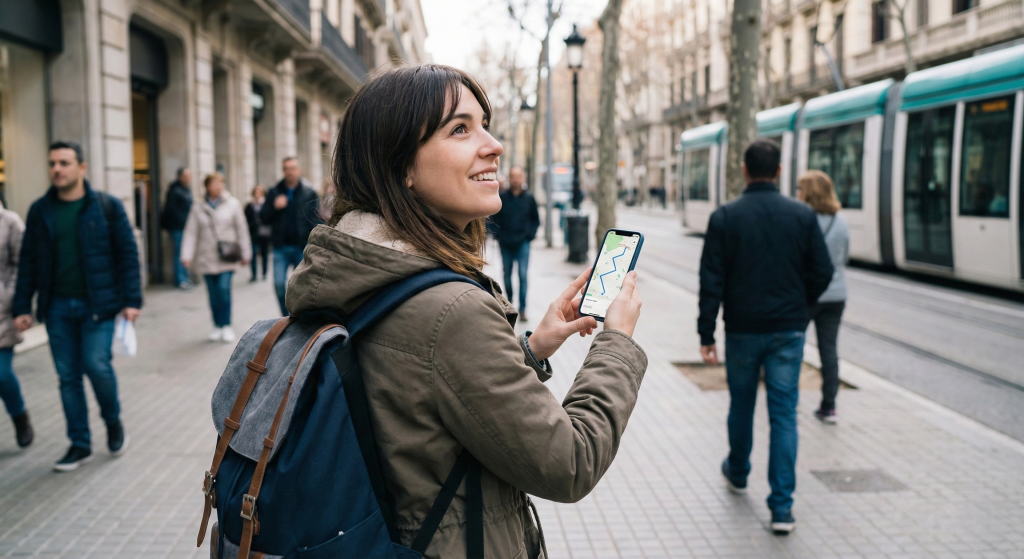
Within-destination transportation varies widely by city. Some cities require transit cards purchased in specific locations. Others use contactless payment. Some require cash for buses. Researching these mechanics before arrival takes 10-15 minutes and prevents common frustrations.
Tour Travel vs. Independent Solo Travel
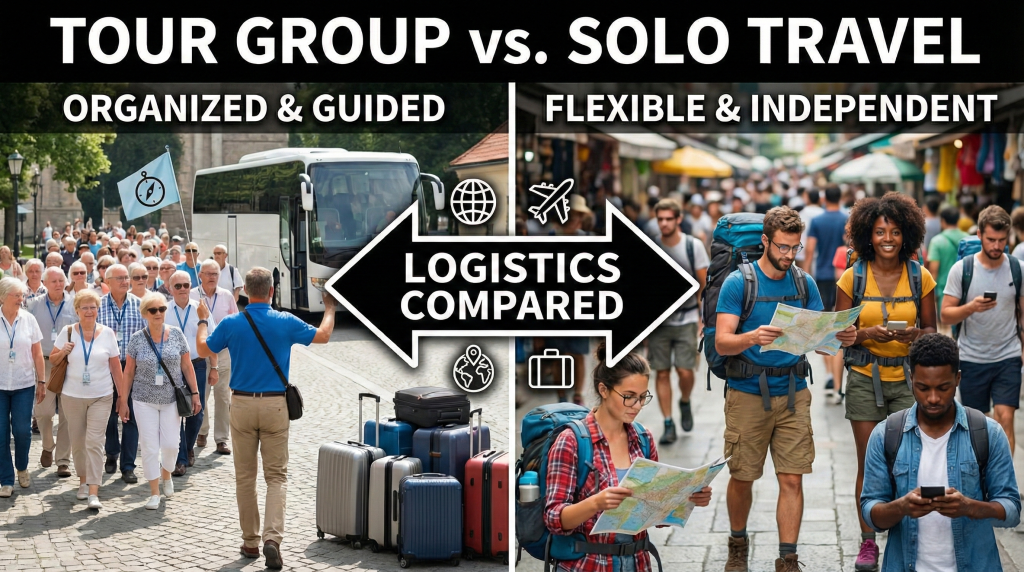
Tours provide specific advantages for first-time solo travelers, but they represent trade-offs rather than purely superior options. The decision depends on destination complexity, personal preference, and trip objectives.
When Tours Make Strategic Sense
Tours make sense for first-time solo travelers when destination complexity would otherwise require extensive research and planning. Countries with language barriers, complex transportation infrastructure, or limited tourist services can be more enjoyable through tours that handle logistics.
Tours also provide built-in social structure. You’ll interact with the same group for the tour duration, creating repeated-contact opportunities that organic travel sometimes lacks. This matters more for travelers who want consistent social interaction than for those prioritizing solitude.
Safety concerns about specific destinations can reasonably motivate tour choices. Some destinations have legitimate safety considerations for solo travelers that group tours mitigate through local guides and established safety protocols. This isn’t about avoiding all risk—it’s about choosing appropriate risk levels for first trips.
Tour Selection Criteria
Tour companies vary dramatically in style, structure, and target demographic. Some focus on young budget travelers (18-35 demographic), others on mature travelers, others on luxury experiences. Mismatched expectations—booking a party-oriented tour when you want cultural immersion—creates dissatisfaction regardless of tour quality.
Single supplements remain common in tour pricing. Some companies have eliminated these for solo travelers, others charge 20-50% premiums for solo occupancy. A few companies actively cater to solo travelers by including room-matching services.
Group size significantly affects tour experience. Tours with 40+ people limit interaction with guides and create logistical delays. Tours with 8-15 people allow more flexibility and deeper interaction but typically cost more. Neither is objectively better—they serve different preferences.
Hybrid Approaches
Many first-time solo travelers benefit from hybrid approaches—combining independent travel with tour segments. Booking a week-long tour followed by a week of independent travel provides structured introduction to a destination with opportunity to apply learned skills independently.
Day tours and activities can be booked within otherwise independent trips. This provides the logistical simplicity of tours for complex activities (hiking, water sports, multi-site visits) while maintaining independent flexibility for accommodation and pace.
Bottom Line:
- Tours work well for complex destinations, consistent social structure, and reduced planning burden
- Independent travel provides more flexibility, lower costs, and deeper destination engagement
- Hybrid approaches (tour followed by independent time, or day tours within independent trips) combine advantages
Extended Preparation Considerations
Several preparation areas receive insufficient attention from first-time solo travelers but significantly impact trip experience.
Documentation and Legal Requirements
Passport validity requirements vary by country. Many countries require passports valid for 6 months beyond your departure date, not just for the entry date. Missing this requirement can result in denied boarding, not just entry problems at destination. Checking specific requirements takes five minutes and prevents expensive last-minute passport renewals.
Visa requirements change periodically and vary based on citizenship. Official government sources (embassy websites, foreign ministry sites) provide current requirements. Travel blogs and forums sometimes contain outdated information.
Some destinations require specific documentation beyond passports and visas. Proof of onward travel, vaccination records, and travel insurance documentation fall into this category. Understanding requirements before booking prevents situations where you’ve paid for flights but can’t meet entry requirements.
Health Preparation
Travel insurance should include medical coverage adequate for your destination. Medical costs vary dramatically between countries. A hospital visit in the United States can cost 10x more than the same care in Thailand. Insurance coverage amounts should reflect destination costs.
Prescription medications should be brought in original containers with documentation. Some countries restrict medications that are freely available in others. Research specific medication regulations for your destination, particularly for controlled substances.
Basic first-aid supplies suit solo travelers better than group travelers who can share resources. A small kit with pain relievers, antihistamines, bandages, and basic OTC medications handles common travel health issues without requiring you to navigate foreign pharmacies while unwell.
Communication Planning
Phone plans for international travel vary between keeping your home plan active with international roaming versus buying local SIM cards. Roaming is simpler but expensive. Local SIMs require unlocked phones and minor technical comfort but cost significantly less.
Messaging apps (WhatsApp, Signal, Telegram) work internationally over WiFi or data and bypass SMS charges. Installing these before departure and confirming they work prevents connectivity gaps on arrival.
Emergency contacts should be programmed into your phone with clear labels. Embassy contact information, travel insurance hotline, and a trusted person at home should be immediately accessible without internet connectivity.
Packing Strategy
Solo travelers cannot distribute luggage weight among multiple people. Everything you bring, you carry. This makes packing light more critical for solo travelers than for groups.
One carry-on sized bag (approximately 22″ x 14″ x 9″) plus a personal item (backpack or large purse) provides sufficient capacity for most trips under three weeks. This eliminates checked bag fees, lost luggage risk, and mobility constraints from large luggage.
Layering clothing rather than bringing outfit variety reduces volume. Three tops and two bottoms in coordinating colors create more outfit combinations than bringing five complete outfits. Quick-dry fabrics enable sink washing, further reducing clothing quantity needed.
Mental Solo Travel Tips Beginners Often Overlook
Solo travel requires different mental approaches than group travel. Understanding these differences before departure reduces common first-trip frustrations.
Decision Fatigue Management
Solo travelers make more conscious decisions than group travelers. Every meal, activity, transportation choice, and timing decision falls to you. This creates decision fatigue—the declining quality of decisions after long sessions of decision-making.
Experienced solo travelers develop strategies to reduce decision load. Routine development (breakfast at accommodation, dinner at 7pm) eliminates repeated decisions. Limiting daily activity quantity preserves decision energy for important choices.
First-time solo travelers often over-plan, attempting to see everything. This intensifies decision fatigue and reduces enjoyment. Better approach: plan 2-3 must-see items per day, leaving space for spontaneous decisions when energy is available.
Flexibility vs. Structure Balance
Solo travel allows complete flexibility—changing plans without consulting companions. This is theoretically liberating but can feel overwhelming without some structure.
Effective solo travelers balance flexibility with light structure. Booking accommodation and major transportation in advance provides skeleton structure. Leaving daily activities flexible preserves the freedom that motivates solo travel.
The optimal balance varies individually. Some travelers prefer detailed planning and execute it independently. Others want minimal advance planning and maximum spontaneity. Both work—the mistake is assuming all solo travelers want maximum flexibility.
Problem-Solving Mindset
Problems occur in all travel. Transportation delays, accommodation issues, language confusion, getting lost—these are normal travel mechanics, not personal failures.
Solo travelers handle these problems without companion support, but this doesn’t make them unsolvable. It requires accepting imperfect solutions and moving forward rather than dwelling on problems.
Many first-time solo travelers catastrophize minor problems. Missing a bus becomes “my trip is ruined.” A disappointing meal becomes “I should have brought someone.” These problems are temporary inconveniences, not trip-defining failures.
Experienced solo travelers develop resilience through exposure. The first time you handle a missed connection independently builds confidence for future problems. The third time, it’s barely memorable.
Quick Summary:
- Decision fatigue increases with solo travel—routines and limited daily activities help
- Balance flexibility with light structure through advance accommodation booking but flexible daily planning
- Problems are normal mechanics, not personal failures; resilience develops through handling them
Realistic Expectations for First Trips
First solo trips rarely match imagined experiences perfectly. Understanding likely realities versus common expectations reduces disappointment.
Common Reality Checks
Most first-time solo travelers experience some loneliness, even if they generally enjoy solitude. This is normal and doesn’t indicate you’ve made a mistake. It typically peaks in the first 2-3 days and diminishes as you adjust.
Navigation confusion is normal, not a personal failing. Even experienced travelers get lost in new cities. GPS helps but isn’t perfect. Getting lost is part of learning a new place, not evidence of travel incompetence.
Not every moment will feel adventurous or meaningful. Some parts of travel involve waiting, routine tasks, and mundane logistics. Social media creates unrealistic expectations of constant excitement.
Building Confidence Through Experience
Confidence in solo travel develops through successfully handling small challenges, not through eliminating all challenges. Each minor problem solved independently—finding your way after getting lost, resolving accommodation issues, navigating unfamiliar transit—builds capability evidence.
First-day overwhelm is nearly universal among first-time solo travelers. The accumulation of new stimuli, logistics management, and absence of familiar support systems creates temporary stress. This reliably passes by day 2-3 as you develop minimal competence in destination mechanics.
Many travelers report that their first solo trip feels more difficult than subsequent ones, even if subsequent trips involve more complex destinations. This is because the solo travel mechanics (independent decision-making, self-reliance, loneliness management) are learned skills separate from destination difficulty.
Sustainable Solo Travel Practice
Solo travel works best as a long-term practice rather than a one-time event. First trips establish capability and preference understanding that improves future travel.
Learning from First Trips
First solo trips reveal personal preferences that are difficult to predict in advance. Some travelers discover they strongly prefer social accommodation like hostels. Others discover they value privacy more than anticipated and prefer hotels despite higher costs.
Destination preferences also emerge through experience. Some travelers discover they prefer cities with clear tourist infrastructure. Others find excessive tourism infrastructure reduces the experience they’re seeking.
These discoveries don’t represent failures of pre-trip research. They represent information only accessible through experience. Applying these learnings to second trips significantly improves satisfaction.
Progressive Complexity Approach
Experienced solo travelers often recommend progressive complexity—starting with straightforward destinations and gradually increasing difficulty as competence develops. This isn’t about playing it safe. It’s about building genuine skill through manageable challenges before tackling complex situations.
A first solo trip to English-speaking countries with strong tourist infrastructure builds foundational solo travel skills. A second trip might add language barriers while maintaining good infrastructure. A third might involve more complex destinations with limited tourist services.
This progression allows you to isolate variables. If a trip with language barriers goes poorly, you know the challenge was language, not solo travel itself. If a complex destination works well, you know you’ve developed sufficient solo travel competence for difficult environments.
Long-Term Solo Travel Development
Many regular solo travelers report that their travel style evolves significantly over multiple trips. Early trips often focus on hitting major sights and proving capability. Later trips often shift toward deeper destination engagement, specific interests, or relationship-building with places.
This evolution is natural and doesn’t indicate earlier trips were wrong. First trips often need to satisfy the “I can do this” question before travelers can focus on more nuanced experiences.
Some travelers discover that solo travel is something they enjoy occasionally but not exclusively. Others discover it becomes their preferred or only way to travel. Both outcomes are valid—solo travel capability is valuable even if you don’t travel solo exclusively.
Solo travel is simultaneously simpler and more complex than most people imagine. The logistics are straightforward—booking flights and accommodation, researching destinations, and handling practical details work nearly identically to group travel. The interpersonal aspects—managing loneliness, meeting people, and maintaining safety without companion support—require different approaches. First-time solo travelers who prepare thoroughly for practical mechanics while accepting reasonable imperfection in social and emotional aspects typically report successful first trips that build confidence for future travel. The goal isn’t perfection. It’s developing enough competence and understanding to decide whether solo travel suits you, then building on that foundation if it does.