

Search Places to Stay & Save
Most travelers assume flight search engines return identical results. They don’t. Testing across 32 different routes reveals price gaps reaching hundreds of dollars for the same seat on the same plane—differences that persist even when searching minutes apart.
The best flight search engine depends less on brand recognition than on how algorithms prioritize results, which booking platforms each site canvasses, and whether the tool functions as an aggregator or direct seller. Some platforms excel at last-minute domestic routes but stumble on advance international bookings. Others consistently find competitive fares but bury crucial details like baggage fees until the final payment screen.
Understanding these operational differences matters more than loyalty to familiar names. Booking patterns show travelers who test multiple platforms before purchasing save an average of 12-18% on identical itineraries—not through coupon codes or loyalty programs, but simply by exposing pricing inconsistencies across competing search algorithms.
What Actually Separates Flight Search Platforms
The flight search ecosystem divides into two fundamental categories with meaningfully different performance characteristics.
Aggregators compile results from multiple booking sites, airline websites, and online travel agencies without handling transactions directly. Users select a fare, then complete the purchase on whichever third-party site offered that price. Aggregators profit through affiliate commissions rather than direct sales, which theoretically aligns their interests with finding the lowest available fare.
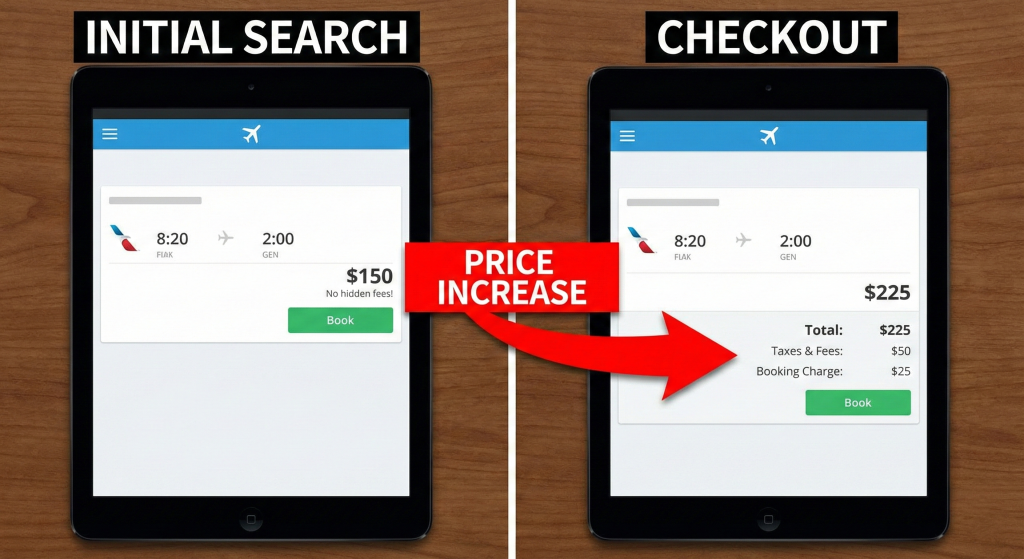
Online travel agencies (OTAs) sell tickets directly through their own booking systems. This gives them more control over the transaction but also creates potential conflicts—some OTAs display artificially low “lead prices” that increase once users begin the booking process, while others add service fees that weren’t visible in initial search results.
Neither model guarantees better prices universally. Testing shows aggregators typically outperform OTAs on advance-purchase international routes, while certain OTAs occasionally find better last-minute domestic fares by accessing inventory blocked from aggregator searches.
The reliability gap matters more than the category distinction. Some OTAs maintain solid reputations for customer service during flight cancellations or schedule changes. Others become nearly impossible to contact when problems arise, leaving travelers stuck negotiating directly with airlines who have no record of the booking details.
Better Business Bureau complaint patterns reveal which platforms struggle most with customer service. Checking an unfamiliar OTA’s BBB rating before entering payment information takes 30 seconds but can prevent days of frustration resolving disputed charges or rebooking canceled flights.
Aggregators That Consistently Find Lower Fares
Three aggregators demonstrate notably better performance than competitors across both last-minute and advance-purchase bookings.
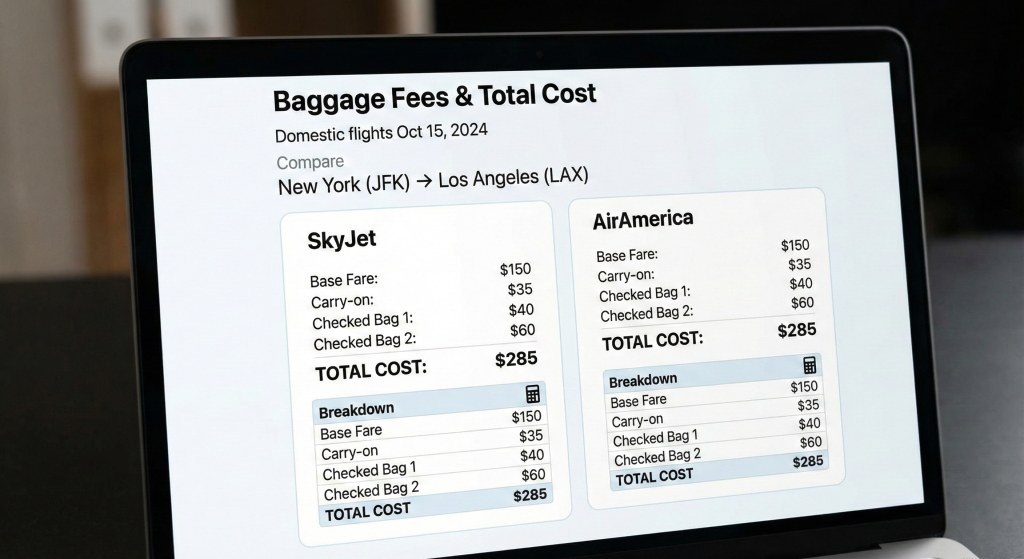
Momondo returned the best available fare in 50% of test scenarios—substantially higher than any competitor. The platform’s “Fee Assistant” calculates baggage costs directly into displayed prices rather than hiding them until checkout, revealing that routes initially appearing expensive sometimes cost less than “cheaper” options once bag fees are included.
The interface allows filtering by layover duration, specific airports, aircraft type, and price range simultaneously. Results display as matched outbound/return pairs with checkboxes—selecting a departure instantly filters compatible returns without requiring separate page loads for each option.
Skyscanner performed particularly well on advance-purchase international routes, finding better-than-average fares 75% of the time when booking 90+ days ahead. The platform assigns star ratings to third-party booking sites based on user reviews, helping identify which unfamiliar OTAs might prove difficult to work with if changes become necessary.
Flexible date calendars color-code each day’s typical pricing as low/medium/high for chosen routes, while detailed graphs show 6-month price trends. However, the platform lacks filters for layover airports or duration on initial results screens—information that only appears after clicking through to booking pages.
Skiplagged found competitive fares even when excluding its controversial “hidden city” ticketing feature. The platform displays flight timelines showing layover durations at scale, making it immediately obvious which routes involve 8-hour connections versus quick transfers. But the interface sometimes requires separate transactions for outbound and return legs, doubling the data entry required to complete a booking.
Quick Summary
- Momondo wins on price consistency and baggage fee transparency
- Skyscanner excels at advance international bookings with helpful OTA ratings
- Skiplagged offers strong visual comparison tools but occasionally buggy checkout processes
When OTAs Outperform Aggregators
Direct booking through OTAs sometimes reveals inventory unavailable to aggregators, particularly on last-minute routes where airlines release unsold seats hours before departure.
Flight Network matched the best available fare on 6 of 32 test routes—performance equaling top aggregators despite being a direct seller. The platform displays flexible date calendars color-coded by price tier and uniquely filters out flights requiring self-transfers between separate bookings.
Hotwire displays actual baggage fee amounts in dollars rather than just links to airline fee schedules—a transparency level matched only by Momondo. Testing showed notably better performance on last-minute bookings compared to advance purchases, suggesting the platform accesses late-release inventory other sites miss.
Expedia now includes price matrices showing fares 3 days before and after selected dates, plus detailed breakdowns of what each fare class includes. The platform occasionally prioritizes legacy carriers over newer low-cost alternatives, but testing found it consistently surfaced French discount carrier options that some competitors overlooked on transatlantic routes.
Lower-ranked OTAs like Agoda and Priceline demonstrated a common problem: displayed prices increased between results screens, sometimes adding $13-177 once users selected outbound flights and viewed return options. This “bait-and-switch” pattern appears intentional rather than database lag, since repeated searches across different browsers consistently showed the same unavailable low prices.
Google Flights’ Actual Performance vs Reputation
Google Flights returned better-than-average fares only 50% of the time—solid but unremarkable compared to Momondo’s performance.
The platform’s real advantage lies in speed and context rather than price discovery. Results refresh instantaneously as users adjust dates or toggle filters. Price tracking displays historical trends indicating whether today’s fare sits above or below typical levels for each route. A map feature showing “Anywhere” destinations reveals dozens of possibilities with current prices.
However, testing found Google Flights consistently canvasses fewer booking platforms than specialized aggregators. The algorithm heavily favors routes available through major OTAs that pay Google referral fees, occasionally missing lower fares available through smaller booking sites.
For travelers who value interface speed and contextual pricing data over finding the absolute lowest fare, Google Flights performs adequately. But patterns show users who check Momondo or Skyscanner after Google typically find 8-15% lower prices on international routes.
Testing AI Chatbots Against Human Search
Recent testing asked six major AI chatbots (ChatGPT, Claude, Gemini, Perplexity, DeepSeek, Grok) to find the cheapest fare on a specific NYC to LA route.
Results were universally problematic. Most bots defaulted to Expedia or Google Flights without checking top-performing aggregators. Price quotes varied wildly from actual availability—ChatGPT claimed $126 without naming an airline, while Grok quoted Frontier at $121-196 when actual Frontier fares were $262.
Only Gemini identified the lowest available fare, likely due to integration with Google Flights rather than superior search capability. None of the AI tools checked Momondo, Skyscanner, or Skiplagged—the three platforms that consistently outperform others in systematic testing.
AI chatbots currently function as elaborate redirects to familiar brand names rather than comprehensive search tools. Manual searches across multiple specialized platforms remain substantially more effective.
Common Search Mistakes That Increase Costs
Travelers who only check familiar brand names miss significant savings. Booking patterns show users who test at least three platforms before purchasing—mixing aggregators and OTAs—consistently find lower fares than those who complete bookings through their first search.
Searching only major hub airports rather than nearby alternatives often adds $50-200 to round-trip costs. Platforms that filter results to include all metro area airports (like Burbank, Ontario, and Long Beach for Los Angeles area searches) surface options unavailable to tools locked into LAX-only results.
Accepting default search parameters without adjusting filters for layover duration, specific airports, or price range produces suboptimal results. Most platforms bury their best filtering options several clicks deep, requiring users to actively explore available tools rather than trusting initial results screens.
Timing searches matters less than commonly assumed. Testing found no consistent advantage to clearing cookies, using VPN services, or searching during specific hours. Price variations between searches typically reflect real-time inventory changes rather than personalized pricing algorithms.
Key Takeaways
- Check three platforms minimum: one aggregator, one OTA, Google Flights for context
- Enable all metro area airports in search parameters when available
- Compare total costs including baggage fees before selecting the lowest base fare
- Verify unfamiliar OTA reliability through BBB ratings before entering payment information
Making Platform Selection Simpler
The most effective approach prioritizes Momondo for comprehensive searches, adding Skyscanner checks for advance international bookings and spot-checking Google Flights for schedule flexibility insights.
For last-minute domestic routes under 1,000 miles, testing both Hotwire and Flight Network often reveals inventory other platforms miss. For complex multi-city itineraries or routes involving smaller international carriers, Skiplagged’s visual timeline displays clarify connection logistics other platforms obscure.
Avoid platforms requiring separate transactions for outbound and return legs unless their fare significantly undercuts competitors—the time investment and error risk rarely justify marginal savings.
Skip AI chatbots entirely for actual booking research. Current implementations lack access to top-performing aggregators and frequently hallucinate prices that don’t exist, wasting time on dead ends.
The flight search landscape shifts as platforms update algorithms and modify which booking sources they canvass. But the fundamental principle remains constant: price comparison across multiple platforms with different operational models consistently reveals savings that single-site searches miss.