

Search Places to Stay & Save
Many international travelers assume that a standard fifty-pound limit applies universally to every leg of a cross-border journey. In reality, international baggage regulations are governed by a complex web of operating carriers, codeshare agreements, and regional aviation authorities. A single oversight during a connection can turn a routine transit into a multi-hundred-dollar penalty at the boarding gate. Relying on airport scales for final confirmation is a high-risk strategy that often fails when ticketing agents apply strict carrier-specific rules. Navigating these fees requires shifting from a reactive packing mindset to a procedural system. By understanding the structural differences between domestic and international allowance frameworks, travelers can eliminate the anxiety of gate-side weighing. Managing luggage weight is not about packing less; it is about understanding the exact math that airlines use to calculate their operational limits.
The Hidden Arithmetic of International Baggage Limits
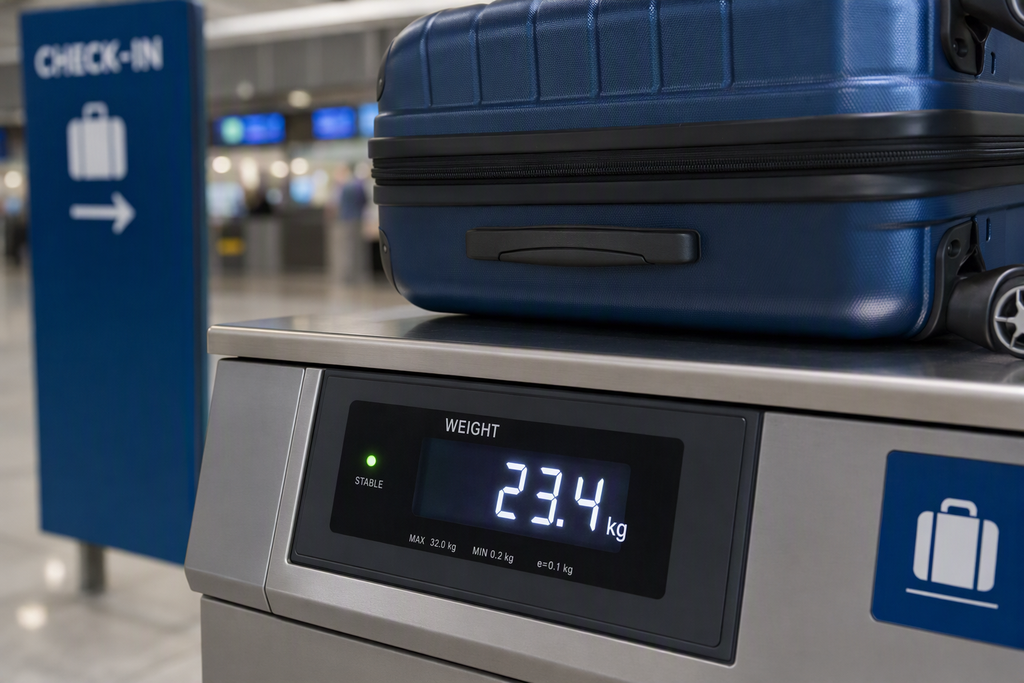
International itineraries typically operate under one of two systems: the piece concept or the weight concept. The piece concept, standard for flights touching North America, restricts passengers to a specific number of bags with individual weight caps (usually 50 pounds or 23 kilograms). Conversely, the weight concept, common across Europe, Asia, and the Middle East, dictates a total cumulative weight limit across all checked items. A common point of failure occurs during codeshare flights. When booking through one airline but flying on another, the baggage policies of the “Most Significant Carrier” typically govern the journey, as defined by International Air Transport Association resolution 302. However, interpreting which airline qualifies as the most significant carrier can be highly confusing during multi-stop transits.
Key Takeaways
- The piece concept limits individual bag weights, while the weight concept limits cumulative total weight.
- Codeshare flights follow the rules of the Most Significant Carrier, which may differ from the booking airline.
Procedural Strategies for Pre-Flight Weight Management
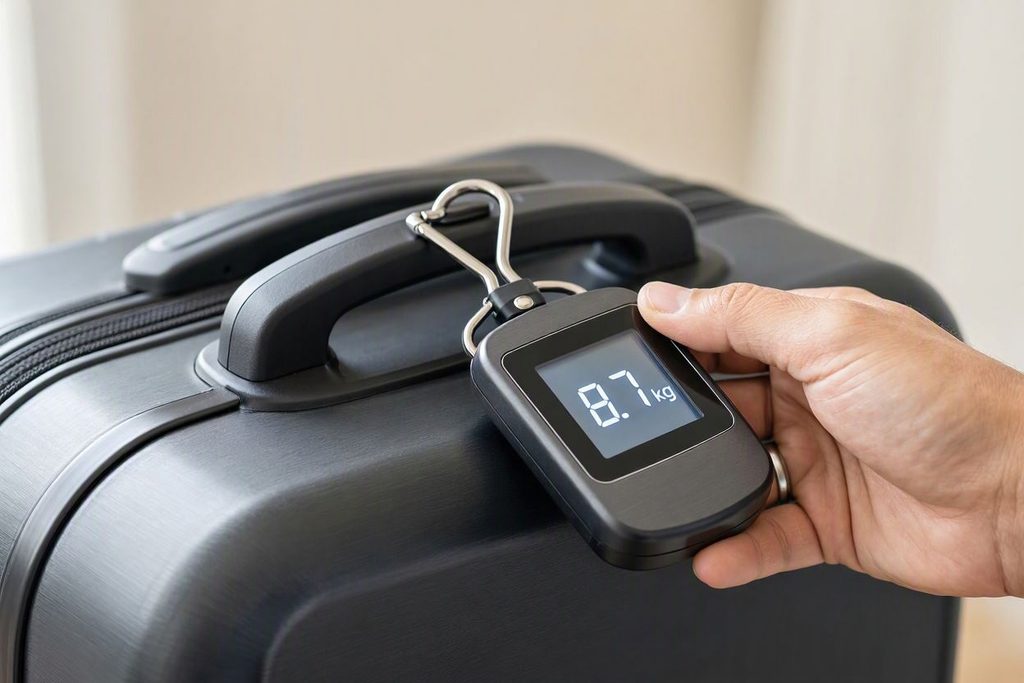
Eliminating weight-related friction requires an active, pre-departure verification workflow. Relying on subjective feel or low-accuracy bathroom scales often introduces a margin of error that exceeds airline tolerances. First, verify the baggage allowance for every single carrier in the itinerary, paying close attention to regional partner airlines operating smaller aircraft. Smaller regional jets used for short-haul international segments often enforce stricter weight limits (sometimes as low as 15 to 20 kilograms) than the main transoceanic carrier. Second, integrate a dedicated digital luggage scale into the packing workflow. Weighing the bag when fully packed, and again after any mid-trip acquisitions, provides an objective metric. Always calibrate for a two-pound buffer to account for variations between home scales and certified airport equipment.
Bottom Line
- Regional connection flights often enforce lower weight limits than long-haul transoceanic legs.
- Always maintain a safety buffer of at least two pounds to account for uncalibrated airport scales.
| Region / Scenario | Standard Allowance System | Typical Weight Limit |
|---|---|---|
| North American Transatlantic | Piece Concept | 50 lbs (23 kg) per bag |
| Intra-European Regional | Weight Concept | 44 lbs (20 kg) cumulative |
| Asia-Pacific Domestic/Regional | Weight Concept | 33-44 lbs (15-20 kg) total |
Local Food Tip Many Tourists Miss
Outside peak tourist zones in major international transit hubs like Tokyo Narita or Munich, many airport employees and long-haul crews bypass the main terminal food courts entirely. Instead, they favor the small, basement-level convenience shops or staff-canteen-adjacent noodle bars. These locations serve highly authentic, fresh local meals at a fraction of the price found past security checkpoints, providing a quiet place to sit while organizing travel documents.
Mitigating Gate-Side Overage Fees

When a bag is flagged as overweight at the check-in desk, options narrow rapidly. Understanding how to handle this scenario calmly can save significant capital. Many carriers charge flat fees for overweight bags that escalate steeply depending on the route. In some cases, paying for a second checked bag in advance online is significantly cheaper than paying the penalty rate for a single overweight bag at the counter. According to travel data compiled by the Bureau of Transportation Statistics, pre-purchased baggage options are consistently priced lower than gate-declared overages. Additionally, carrying an ultra-lightweight, packable duffel bag inside the main suitcase offers an instant contingency plan. If the main bag exceeds the limit, transferring dense items like shoes, books, or heavy electronics into the packable duffel allows travelers to redistribute weight without abandoning belongings.
✈️ Booking Transparency Advisory: Many budget carriers operating international routes do not bundle checked luggage in the base ticket price. Furthermore, they may restrict carry-on weight to as little as 7 kilograms (15.4 pounds). Always check the specific weight restrictions of your operating carrier at least 24 hours before departure to avoid paying triple-rate fees at the gate.
Best For: Multi-stop international itineraries where carriers change frequently and weight limits are inconsistent.
Skip If: Traveling exclusively on premium-class tickets where baggage allowance is generous and limits are rarely enforced.
Frequently Asked Questions
Does buying baggage allowance online save money compared to paying at the airport?
Yes. Almost all international airlines offer a substantial discount, often up to 50 percent, for baggage allowances purchased online prior to arriving at the airport. Gate-side penalties are universally the most expensive way to handle excess luggage weight.
What happens if my bag is overweight on a connecting flight with a different airline?
If your connection is on a single ticket, the Most Significant Carrier rules usually apply. However, if you booked separate tickets across different airlines, you must comply with each carrier’s specific limits individually, which may require re-checking and paying fees for each segment.
Are personal items weighed alongside carry-on luggage?
Increasingly, yes. Low-cost international carriers frequently weigh both your primary carry-on bag and your small personal item at the boarding gate to ensure their combined weight does not exceed the cabin limit.
To avoid overweight baggage fees on international flights, travelers must rely on structured preparation rather than last-minute packing maneuvers. Treating luggage limits as a fixed logistical parameter—and planning for regional variations—protects both your travel budget and your peace of mind. Investing in a reliable digital scale and adopting a systematic packing framework ensures that you remain in control of your journey, regardless of the carrier or destination. Sustainable packing habits and proactive weight distribution always triumph over hasty, expensive gate-side adjustments.