

Search Places to Stay & Save
Choosing between flexibility and savings is a constant challenge for modern travelers. Opting for non-refundable hotel rates can feel like a calculated gamble, promising immediate discounts in exchange for absolute commitment. Standard industry patterns show these rates are typically 10% to 30% cheaper than flexible options. However, unexpected disruptions—from sudden illnesses to flight cancellations—frequently turn these upfront savings into complete financial losses. Travelers must weigh the true value of the discount against the realistic probability of plan changes. This decision requires a systematic approach rather than a simple guess.
Evaluating Non-Refundable Hotel Rates for Your Trip

Evaluating whether to lock in a restricted booking requires analyzing specific criteria to measure your actual risk exposure. Travelers should not make this choice based solely on the cheapest displayed price. Instead, a structured assessment of your itinerary stability is necessary. The National Association of Insurance Commissioners indicates that clear, pre-planned trips carry significantly lower cancellation risks than multi-destination tours. If your dates, flights, and companions are fully locked in, the risk drops substantially.
Key Takeaways
- Assess lead time to determine the probability of unexpected plan modifications.
- Verify if the discount margin offsets the cost of potential cancellation.
- Review credit card policies to see if trip protection covers restricted hotel bookings.
| Criterion | High Risk (Choose Flexible) | Low Risk (Choose Non-Refundable) |
|---|---|---|
| Lead Time | More than 30 days out | Less than 7 days out |
| Travel Insurance | None or basic coverage | Comprehensive or CFAR policy |
| Weather Risk | Hurricane or winter storm season | Stable seasonal weather |
| Trip Complexity | Multi-leg international transit | Single-destination domestic stay |
When the Discount is Worth the Risk
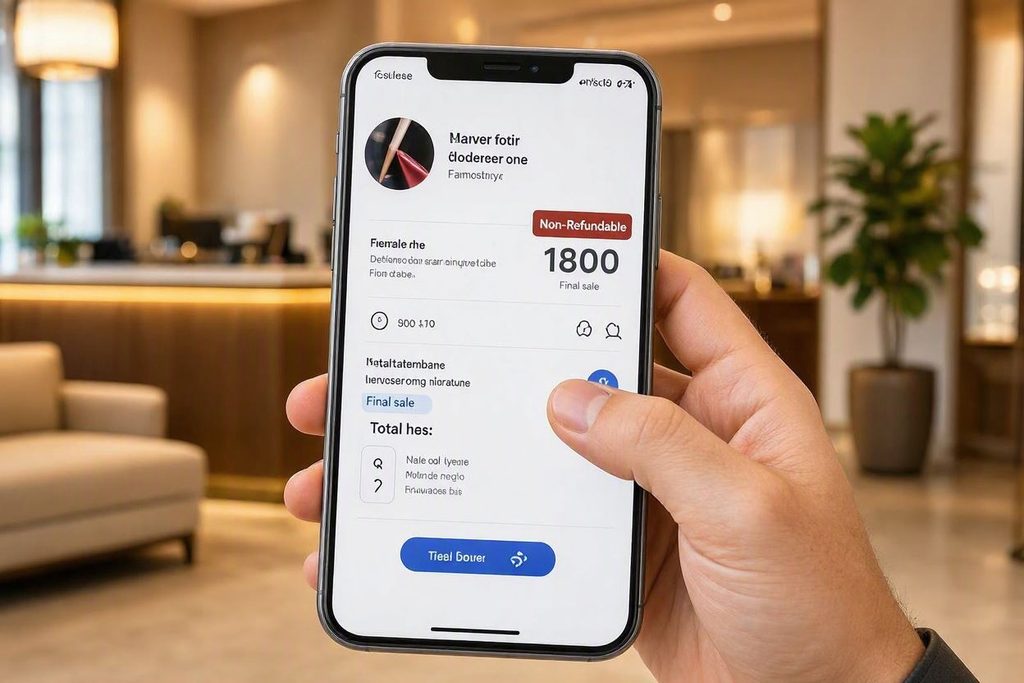
The upfront discount is worth the risk only when your travel plans are highly stable and the price difference is substantial. A minor saving of 5% rarely justifies losing the ability to cancel. Industry data analyzed by consumer advocacy groups suggests a minimum price delta of 15% is required to offset the risk of cancellation. For high-end luxury properties, a 20% discount can equate to hundreds of dollars saved. In these scenarios, the math heavily favors the restricted rate if the check-in date is close.
Best For: Last-minute bookings within 48 hours of arrival, business travel with fixed meetings, or stays backed by robust insurance.
Skip If: Traveling with young children, booking during active storm seasons, or organizing complex group itineraries.
How to Mitigate Non-Refundable Booking Risks

Mitigating the risks of booking restricted rooms is best achieved through external financial protections and strategic timing. Many credit card issuers offer built-in trip interruption benefits that cover non-refundable lodgings. However, these policies only apply under specific, documented emergencies. For complete protection, travelers often turn to third-party providers. The Federal Trade Commission advises consumers to read the fine print on cancellation policies before assuming any external coverage applies.
Local Food Tip Many Tourists Miss
Outside peak tourist zones, many residents choose to dine at small, family-run bistros that do not accept advanced reservations. In historic European and Asian city centers, these establishments often post their daily menus on chalkboard signs by noon. Travelers who bypass the heavily marketed hotel dining rooms find authentic regional dishes at a fraction of the cost.
Quick Summary
- Always verify credit card coverage limits before relying on card-based trip protection.
- Book restricted rates closer to the actual travel date to minimize scheduling conflicts.
- Consider Cancel For Any Reason (CFAR) insurance policies for high-value reservations.
Common Pitfalls and Hidden Booking Fees
Hidden fees and rigid cancellation windows often catch travelers off guard during checkout. Many online platforms present low initial rates that exclude mandatory local charges. These additions can quickly erase any savings gained from choosing a restricted option. To make an accurate comparison, always calculate the total cost, including all local taxes, resort fees, and service charges.
✈️ Booking Transparency Advisory: Always calculate the total cost, including resort fees and local taxes, before comparing rates. A restricted room with high resort fees may cost more than a flexible room with none.
What Guests Love
- Guaranteed lowest base room rates available.
- Protection against sudden seasonal hotel price surges.
- Simplified personal budgeting once payment is completed.
Things to Know
- Total loss of funds if plans change unexpectedly.
- No modifications or date changes allowed under any circumstances.
- Strict documentation is required to claim insurance refunds.
Frequently Asked Questions
Are non-refundable hotel rates ever negotiable?
Generally, hotel properties will not negotiate the refund terms of these rates once booked. In extreme cases, such as medical emergencies or natural disasters, some managers may offer a partial credit for future stays, but this is entirely at their discretion.
Does travel insurance cover non-refundable hotel bookings?
Standard travel insurance policies will cover these expenses only if you cancel for a covered reason, such as illness or jury duty. To cancel for any other reason, you must purchase a Cancel For Any Reason (CFAR) policy upgrade.
Can you change the dates on a non-refundable reservation?
Most properties do not permit date changes on restricted reservations. When changes are allowed, they usually require paying the difference to the current rate, plus a significant administrative change fee.
Making a smart decision on restricted hotel pricing comes down to risk tolerance and systematic evaluation. By comparing the exact discount margin against your itinerary security, you can secure real savings without unnecessary stress. Ground your travel decisions in analysis rather than hope to ensure a smooth booking journey.