
Search Places to Stay & Save
Many travelers assume that buying a suitcase labeled as standard cabin size guarantees a stress-free boarding process. In reality, strict enforcement and changing airline business models have turned baggage dimensions into a highly volatile variable. What passes without question on one airline can trigger an expensive gate-check fee on another. As airlines increasingly monetize overhead bin space, cabin crews are strictly enforcing structural limits using rigid metal sizers at the gate. Relying on outdated assumptions or assuming a bag that fit last year will fit today is a common path to unexpected travel friction. This guide outlines the current state of carry-on rules, detailing how domestic and international carriers define compliant luggage. By understanding these structural constraints before packing, travelers can avoid unexpected fees and streamline their transit experience.
The Disappearing Standard: Why 22″ x 14″ x 9″ Is No Longer Safe
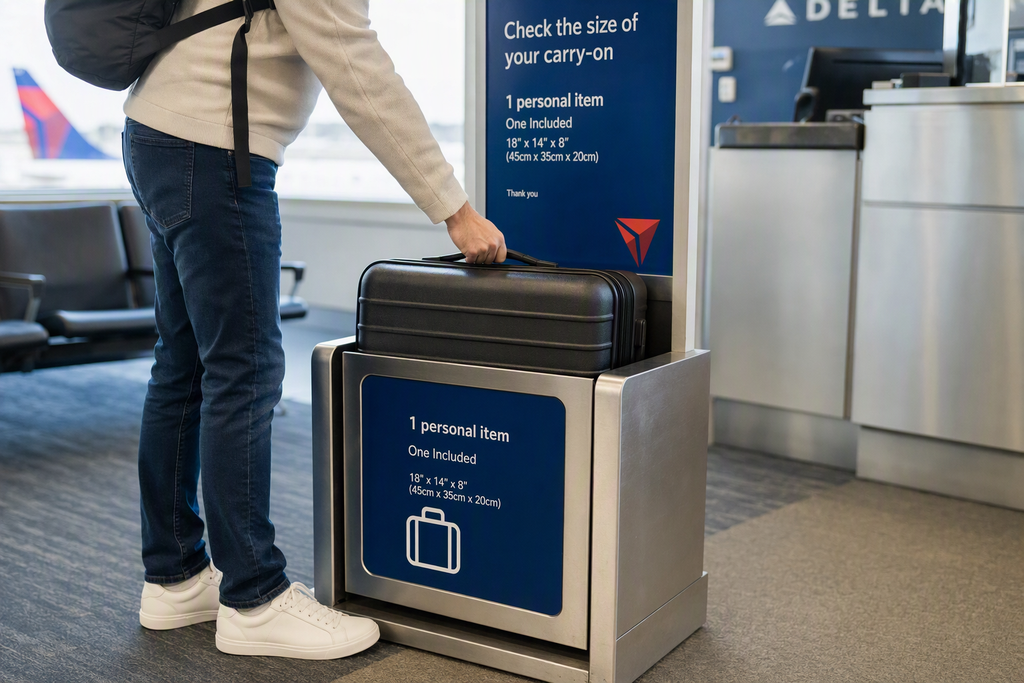
For decades, the standard carry-on dimensions of 22 x 14 x 9 inches (56 x 36 x 23 cm) served as a reliable benchmark for domestic travel within the United States. However, global consolidation and the rise of ultra-low-cost carriers have fractured this standard. Today, luggage size limits are heavily influenced by aircraft configurations and fare classes rather than a universal regulatory agreement. While the Federal Aviation Administration baggage safety guidelines set baseline parameters for cabin safety, they leave the enforcement of specific baggage dimensions entirely up to individual carriers.
Many international carriers, particularly in Europe and Asia, restrict carry-on height to 55 cm (approximately 21.5 inches) and depth to 20 cm (7.8 inches). A bag that easily fits in the overhead compartment of a Boeing 737 on a domestic route may be rejected at the gate for an Airbus A320 regional flight. Furthermore, weight limits—once ignored for cabin luggage—are now actively enforced. Some global airlines impose a strict limit of 7 kg (15 lbs) for all cabin items combined, a threshold easily exceeded by empty structured suitcases.
Quick Summary
- The historic 22″ x 14″ x 9″ benchmark is no longer universally accepted, especially outside the United States.
- International airlines frequently reduce allowable depth to 7.8 inches (20 cm) and impose strict weight limits.
- Protruding wheels, handles, and external pockets must fit entirely within the gate sizer dimensions.
Major Domestic and International Airline Allowances
Navigating these disparate rules requires analyzing airline policies by region and business model. Legacy carriers generally offer more generous dimensions, whereas budget carriers monetize cabin space by restricting passengers to a single personal item unless an upcharge is paid.
According to the International Air Transport Association cabin bag standards, attempts to standardize cabin baggage dimensions globally have historically faced resistance due to varying cabin configurations across regional aircraft fleets. To plan effectively, travelers should review the exact specifications of the carrier operating each leg of their journey. Code-share flights present a particular risk, as the baggage rules of the operating carrier always take precedence over the airline that sold the ticket.
Key Takeaways
- Legacy domestic carriers maintain the traditional 22″ x 14″ x 9″ limit with no weight restrictions.
- European budget carriers restrict free cabin baggage to small under-seat personal items only.
- Always measure luggage with wheels and handles fully extended to ensure compliance with gate sizers.
| Airline | Max Dimensions (Inches) | Max Dimensions (Centimeters) | Weight Limit |
|---|---|---|---|
| Delta Air Lines | 22 x 14 x 9 | 56 x 35 x 23 | No limit (except specific Asian hubs) |
| American Airlines | 22 x 14 x 9 | 56 x 36 x 23 | No limit |
| United Airlines | 22 x 14 x 9 | 56 x 35 x 22 | No limit (Basic Economy excludes carry-on) |
| Southwest Airlines | 24 x 16 x 10 | 60 x 40 x 25 | No limit |
| JetBlue | 22 x 14 x 9 | 55.8 x 35.5 x 22.8 | No limit (Blue Basic excludes carry-on) |
| Ryanair | 15.7 x 9.8 x 7.8 (Personal Item only) | 40 x 25 x 20 | 10 kg (Must purchase Priority) |
| EasyJet | 17.7 x 14.1 x 7.8 (Personal Item only) | 45 x 36 x 20 | 15 kg |
Understanding Total Baggage Cost Reality
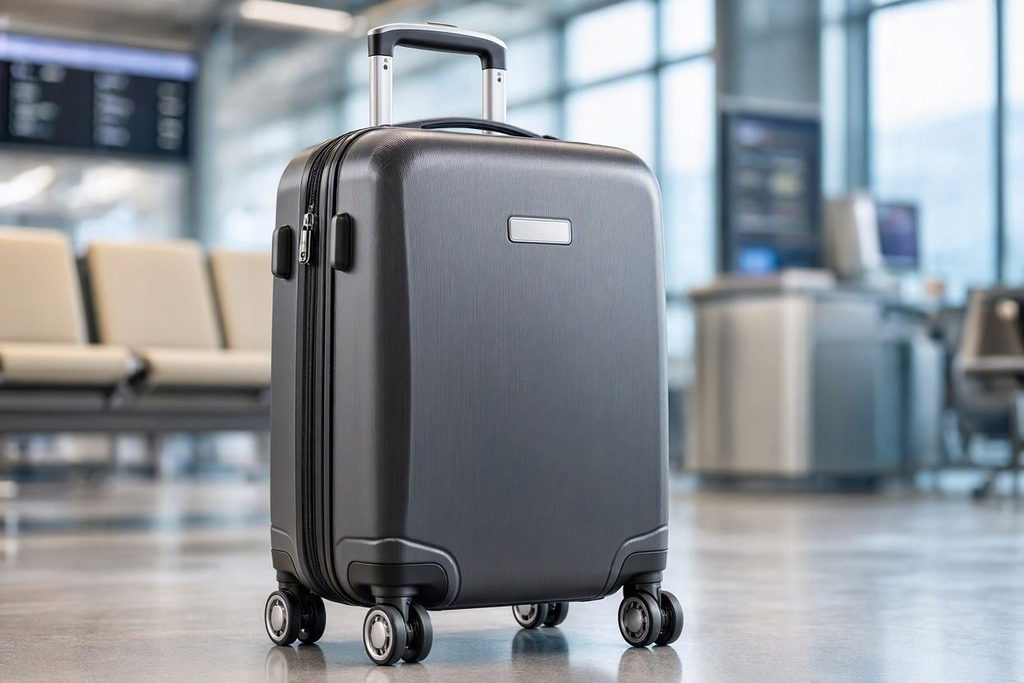
The baseline ticket price is rarely the final cost of air travel. In the current aviation landscape, the distinction between legacy and budget business models has blurred. Many legacy airlines now offer “Basic Economy” fares that strip away overhead bin access, matching the restrictive policies of ultra-low-cost carriers.
When booking these entry-level fares, travelers must calculate the auxiliary cost of adding a carry-on bag post-purchase. Often, purchasing a higher fare class that includes a carry-on is more economical than buying a basic ticket and paying piecemeal baggage fees. According to the Bureau of Transportation Statistics baggage revenue data, baggage fees now represent a multibillion-dollar revenue stream for commercial airlines, incentivizing strict enforcement of carry-on limits at the gate.
✈️ Booking Transparency Advisory: Gate agents are increasingly trained to identify soft-sided bags that bulge beyond the physical sizer limits. Always leave a safety margin of at least half an inch when packing soft-sided spinner luggage, as overpacking can easily expand a compliant bag into a non-compliant shape.
Bottom Line
- Basic Economy tickets frequently restrict passengers to under-seat personal items only.
- Fees paid at the gate are significantly higher than fees paid during booking or online check-in.
- Soft-sided bags must be packed carefully to prevent bulging past the standard structural limits.
Frequently Asked Questions About Carry-On Size Limits
To help clarify persistent areas of confusion, here are the direct answers to common luggage compliance issues based on operational standards.
Do wheels and handles count toward carry-on size limits?
Yes. Gate sizers are rigid metal structures designed to measure the absolute physical envelope of your luggage. Any component that protrudes, including spinner wheels, top handles, and side grips, must fit entirely within the designated dimensions. When purchasing luggage, always verify the “total dimensions” rather than the “case dimensions.”
What happens if my carry-on is slightly over the limit?
If your bag does not slide smoothly into the gate sizer, the agent will typically require you to check it. On budget airlines, this almost always incurs a steep gate-check fee, which must be paid immediately via credit card before boarding. On full-service carriers, they may check the bag to your final destination free of charge if the flight is full, though this is entirely at the crew’s discretion.
Is there a standard weight limit for domestic U.S. carry-ons?
Generally, no. Major domestic carriers like Delta, American, and United do not enforce a maximum weight limit for carry-on bags, provided you can lift the bag into the overhead bin unassisted. However, certain regional partners or routes to specific international destinations may impose restrictions, so verifying the exact flight details remains critical.
Navigating Cabin Luggage Requirements
Successfully managing carry-on constraints is not about finding a loophole; it is about choosing predictable equipment and understanding fare rules. Prioritizing structured, under-sized luggage over maximum-capacity options ensures long-term utility across various airlines. By focusing on intentional packing habits rather than last-minute packing adjustments, travelers can eliminate boarding anxiety and ensure their journey begins smoothly.